Ponte delle Serretelle, Roman bridge in Benevento, Italy
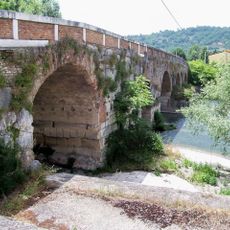
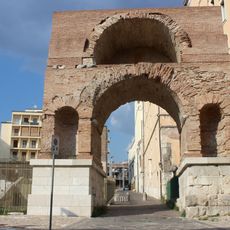
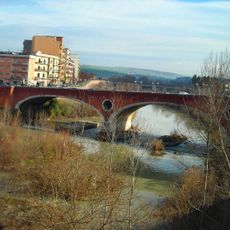
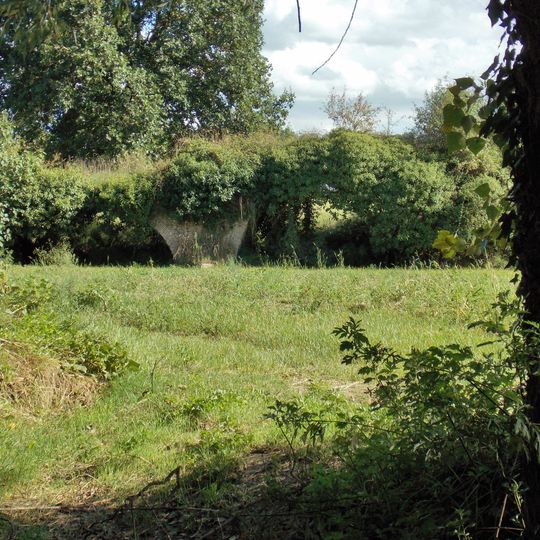
Ponte delle Serretelle is a Roman bridge crossing a waterway in Benevento, constructed with stone arches featuring a distinctive arched design. The structure displays segmental arches along its length, built using techniques typical of Roman engineering.
Stefano Borgia held that the Via Appia passed over the bridge between Ponte Corvo and Ponte Leproso, but Almerico Meomartini argued the road instead followed the hillside; later archaeology supported Meomartini, placing the route along today's Via Serretelle and Via Santa Clementina. The Chronicon of Falcone Beneventano records that in 1113 the constable Landolfo della Greca defeated fifty men of Count Robert of Alife hidden in the orchards here, taking ten prisoners. Borgia described the bridge as ruined in 1764; Meomartini wrote in 1889 that it had been restored, probably after an 1807 act under Louis de Beer's Napoleonic principate, with architect Giovanni Torre directing the works.
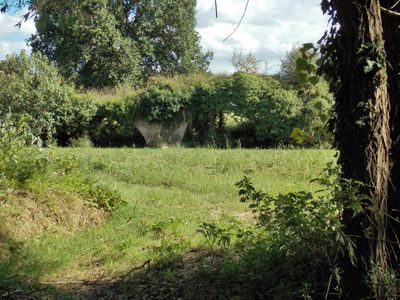
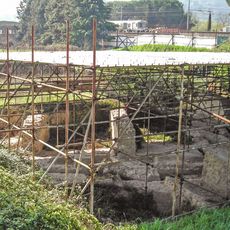
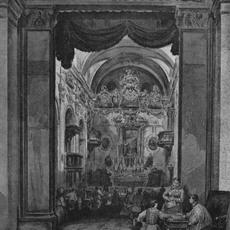
The bridge is named after the Serretelle stream it once crossed; 19th-century maps show it spanning the water near its confluence with the Calore, before the stream was diverted. In 1990 Marguerite Yourcenar's play Le dialogue dans le marécage was staged in front of the ruins during the Città Spettacolo theatre festival.
The bridge can be reached via nearby roads that are accessible on foot or by vehicle. Visitors should wear sturdy footwear when exploring the structure and its surroundings, as the ground around the ancient stonework may be uneven.
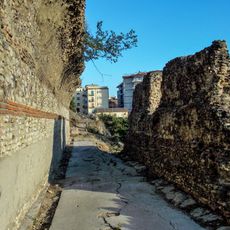
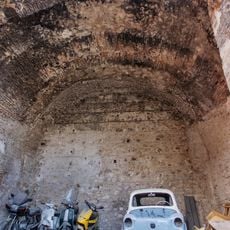
The bridge's arches are built of laterizio brick and measure 3 m in width; the surviving side arch spans 6.80 m. The spandrels between the arches use rubble masonry faced with alternating courses of brick and roughly rectangular cobbles, a technique compared to that of Benevento's Lombard-era walls. Part of a cutwater survives in front of one pier.
The community of curious travelers
AroundUs brings together thousands of curated places, local tips, and hidden gems, enriched daily by 93,405 contributors worldwide.