Teatro Fossati, Historic theatre in central Milan, Italy
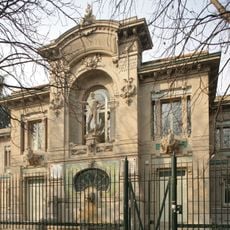
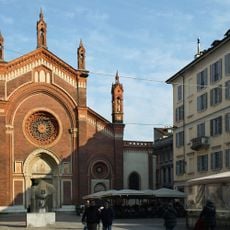
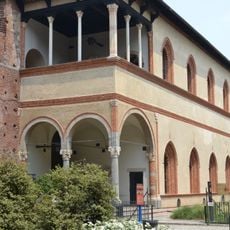
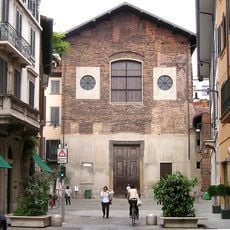
Teatro Fossati is a theatre in central Milan featuring two facades decorated with terracotta ornaments, including a Garibaldi statue visible from Via Rivoli and Corso Garibaldi. The interior has an open layout with flexible seating that can be adjusted for different types of performances and events.
Carlo Fossati founded the theatre, designed by architect Fermo Zuccari, and its first performance took place on 25 April 1859, when the entrance was on Via Rivoli. It was one of Milan's busiest theatres, staging daytime shows, and in 1881 became the first theatre in Italy to try electric lighting. After 1925 it became a cinema and then closed; Giorgio Strehler recovered it in 1979, and a four-year restoration by Marco Zanuso, costing 10 billion lire, reopened it in 1986 as the Teatro Studio.
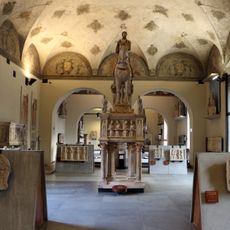
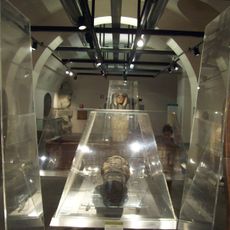
The theatre was named Teatro Fossati after its founder, Carlo Fossati, until 1986, when it became the Piccolo Teatro Studio; in 2013 it was dedicated to actress Mariangela Melato. Its interior was emptied during the Zanuso restoration, leaving an open room with only a few seating positions, used as an experimental acting laboratory.
The theatre stands between Corso Garibaldi and Via Rivoli, beside the Teatro Studio Strehler, with entrances on both streets. After the 1982–1986 restoration by Marco Zanuso the auditorium was emptied of fixed seating, leaving only a few places to sit, so the hall is set up afresh for each production.
In 1881, the theatre became the first in Italy to use electric lighting for performances, making it a pioneer of modern stage technology. This innovation changed how theatres could plan and execute their productions.
The community of curious travelers
AroundUs brings together thousands of curated places, local tips, and hidden gems, enriched daily by 94,049 contributors worldwide.