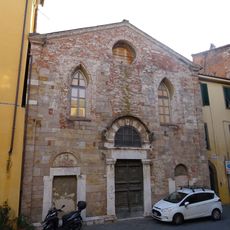
Zecca di Lucca, Numismatic museum in Lucca, Italy.
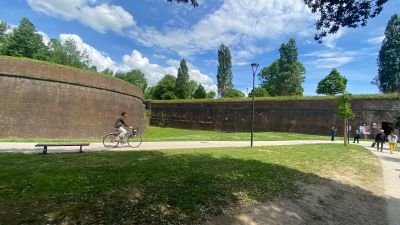
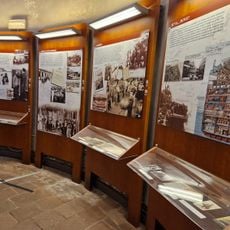
The Zecca di Lucca is a numismatic museum housed in Casermetta San Donato on the city walls, displaying a broad collection of coins, scales, and weights from different periods. The exhibits also include tools and materials that were used in the minting process.
The mint opened around 650 and struck coins for about twelve centuries, producing over two thousand coin types. It was the most important mint of the Lombard kingdom after Pavia, issuing gold tremisses for Astolfo from 749 and Desiderio from 756 to 774. After Charlemagne's reform it remained the only Tuscan mint striking coins, and in 1209 Otto IV renewed its privilege, leading to silver coins with a double-T monogram.
The coins on display feature the Holy Face, a religious image deeply rooted in medieval Lucca's identity. This connection between money and faith shows how the city mixed its commercial life with spiritual beliefs.
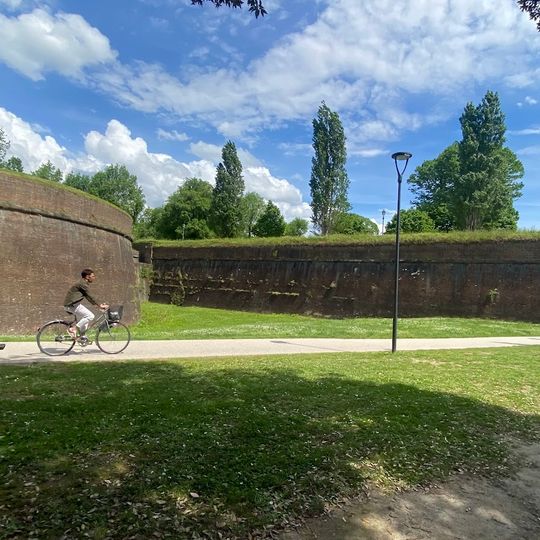
The location sits conveniently along the city walls and is easy to reach from different points in Lucca. Plan about an hour and a half for a comfortable visit to see all the exhibits at a relaxed pace.
The mint's output was studied by Domenico Massagli and Giulio Cordero di San Quintino, scholars drawn to its roughly twelve centuries of activity. In 1551 the Lucca Senate limited the Mancuso, a half-scudo coin, to one struck for every hundred scudi, which makes surviving examples rare.
The community of curious travelers
AroundUs brings together thousands of curated places, local tips, and hidden gems, enriched daily by 95,075 contributors worldwide.