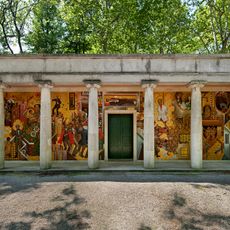
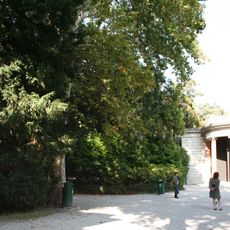
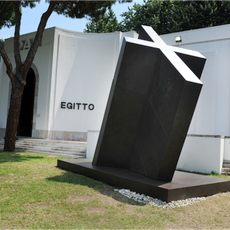
Venezuelan pavilion, National pavilion at the Venice Biennale in the Giardini, Venice, Italy.
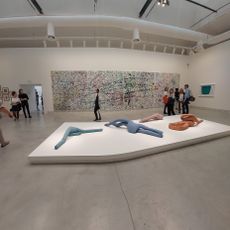
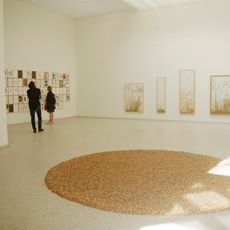
The Venezuelan pavilion is a modern art venue in the Giardini della Biennale in Venice. Its structure contains three exhibition halls, including two raised spaces that receive natural light and feature white marble wall surfaces.
Venezuela was invited to the Biennale after World War II, and the government of Marcos Pérez Jiménez funded a national pavilion, the first for a Latin American country. In 1953 Graziano Gasparini proposed the project; Carlos Raúl Villanueva was first approached but was occupied with the Ciudad Universitaria de Caracas, so Carlo Scarpa, then living in Venice, took it on. Built between 1954 and 1956, it was inaugurated in 1956.
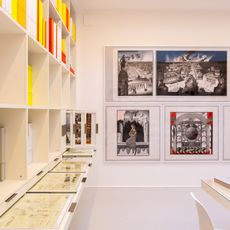
The pavilion hosts contemporary works by Venezuelan artists exploring current social and political questions through different media. Visitors encounter paintings, sculptures, and installations that reflect the artistic voices from that country.
Entry requires a general admission ticket to the Venice Biennale available at the Giardini entrance gates. Plan enough time to explore the nearby pavilions and the gardens around the venue.
It is one of only four permanent Latin American pavilions at this major international art exhibition. This rare distinction ensures Venezuelan artists gain visibility on a truly global artistic stage.
The community of curious travelers
AroundUs brings together thousands of curated places, local tips, and hidden gems, enriched daily by 93,129 contributors worldwide.