Castello di Cariseto, Medieval castle in Cerignale, Italy.
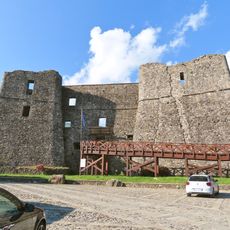
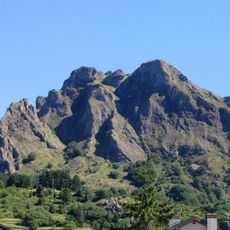
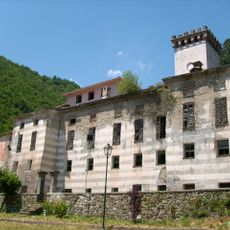
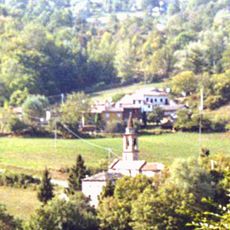
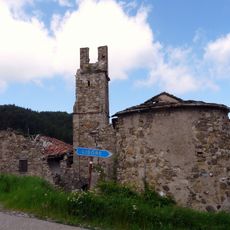
Castello di Cariseto is a ruined hilltop fortress above the hamlet of Cariseto, in the municipality of Cerignale. It stood on a rocky spur on the left side of the Val d'Aveto, flanked by two massive circular towers. Today only the central wall and the tower bases remain, secured but with damaged wooden walkways and stairs; access is forbidden.
First documented in 1052, when Henry III granted the castrum to the monastery of San Paolo di Mezzano, which later enfeoffed the Malaspina. In 1164 Frederick Barbarossa invested Obizzo Malaspina with it, and in 1167 Piacenza forced him to cede Cariseto, Croce, Pietra Corva and Oramala to the commune. The Mulazzo line sold it in 1540 for 9,653 gold scudi to the Fieschi; it passed to the Doria and stayed with them until feudalism was abolished in 1797.
The Statuti di Cariseto e dei feudi della val Trebbia, a 14th-century collection of rules, governed life in the Val d'Aveto and set the rights and duties between lords, free men and villagers. The volume is kept today in the Doria Pamphili archive in Rome, not in the village.
Access to the castle is limited as restoration work is still underway and not all structures are currently open to visitors. It is best to check with the Municipality of Cerignale beforehand to learn which areas are accessible and safe to visit.
The Fieschi conspiracy broke out in Genoa in 1546, six years after the family bought Cariseto for 9,653 gold scudi. Gerolamo Fieschi's men held the castle against Genoese troops under Paolo Moneglia, whose bombards breached it; the defenders fled at night through a tunnel into the woods and, helped by Gian Francesco Nicelli of Piacenza, crossed the Aveto to Farnese territory.
The community of curious travelers
AroundUs brings together thousands of curated places, local tips, and hidden gems, enriched daily by 93,765 contributors worldwide.