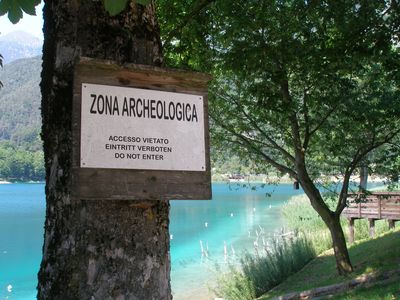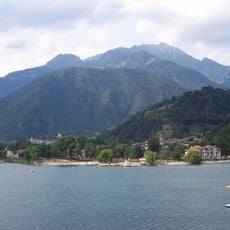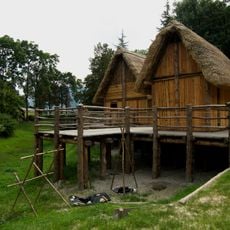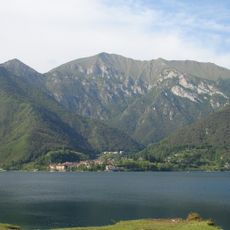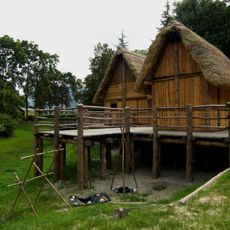
Palafitte di Ledro, Archaeological site at Lake Ledro, Italy
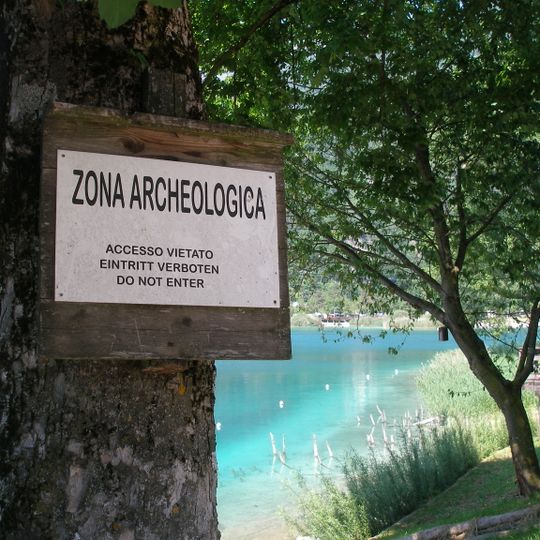
The Lake Ledro pile dwellings are remains of a prehistoric settlement featuring wooden stake structures along the eastern shore of the lake. The site sits at about 651 meters elevation and stretches approximately 160 meters along the water's edge.
The settlement developed during the Bronze Age and later became submerged until a drop in water level during the 1920s exposed the remains. This discovery helped researchers understand how people lived in this early period.
The site lends its name to the Ledro culture, a Bronze Age facies defined after the 1929 and 1937 digs. The 1937 campaign alone uncovered around 10,000 piles and part of a hut floor; workers filled 176 wooden crates with finds, and a linen belt and a dugout canoe came to light in 1967.
The site lies at Molina di Ledro, on the eastern shore of Lake Ledro at 651 m, by the silted mouth of the Ponale stream. The museum built from 1968 and opened in September 1972 stands next to the excavation area. The water level of the lake was lowered by 7 m in 1929 and by 18 m in the winter of 1937, which is when the stakes became visible.
The 1937 excavations, carried out when the lake level dropped 18 metres below datum, uncovered around 10,000 wooden stakes and part of a dwelling floor. Workers from the surrounding area were hired, and 176 wooden crates of finds were filled, though thefts occurred despite Carabinieri guards.
The community of curious travelers
AroundUs brings together thousands of curated places, local tips, and hidden gems, enriched daily by 93,134 contributors worldwide.