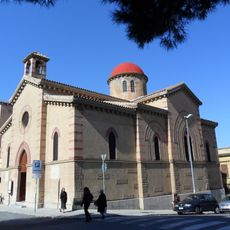
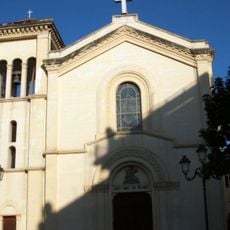
Palazzo della cultura "Pasquino Crupi", Cultural palace and art museum in Reggio Calabria, Italy.
Palazzo della Cultura is a three-floor building housing 20th-century art collections in numerous exhibition spaces across different rooms. The palace displays works by important Italian artists and also features artworks acquired from private sources, offering a broad overview of modern Italian painting.
Designed in the late 1920s by engineers Leale and Calogero and finished in 1934, the building first housed Reggio Calabria's foundling hospital. On 21 May 1943 a bombing raid killed thirty-three children, fourteen wet nurses, two nannies and a nun, and caused heavy structural damage. Rebuilt in 1948, the hospital operated until 1970; the building later held the Genio Civile offices and from 1983 to 1997 the Faculty of Engineering.
The ground floor houses the Piccolo Museo San Paolo, with 180 icons from the 16th to the 20th century, mostly from Eastern European countries. Its other sections hold over 130 paintings and panels, 200 silver pieces such as monstrances and chalices, medieval sculptures, coins from Magna Graecia onward, and an ivory crucifix. A library keeps incunabula and 16th-century editions.
The palace stands at Via Vittorio Veneto 1, near the Reggio Calabria seafront. The ground floor holds the Piccolo Museo San Paolo, the first floor the confiscated works and the Calarco Collection, the second floor the contemporary PiCo rooms. The building is a former foundling hospital, so check step-free access and lift availability before arriving.
The 125 confiscated paintings were stored for nearly three years in the vault of the Bank of Italy before being shown at the Museo della Magna Grecia in 2013 and moved here in 2016. Campolo had hung them throughout his house, even in bathrooms and corridors, and kept a Ligabue under his bed.
The community of curious travelers
AroundUs brings together thousands of curated places, local tips, and hidden gems, enriched daily by 94,533 contributors worldwide.