Piazza Italia, Central square in Reggio Calabria, Italy.
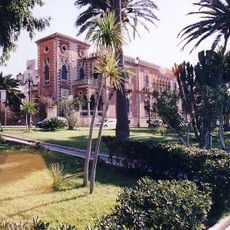
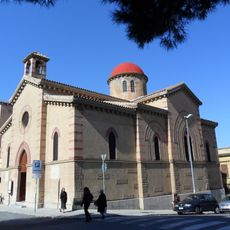
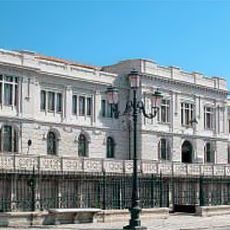
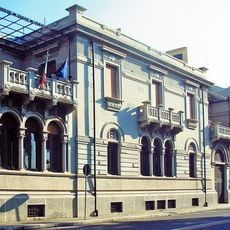
Piazza Italia, officially Piazza Vittorio Emanuele II, is a square-plan square in Reggio Calabria whose south-eastern side opens onto Corso Garibaldi, set obliquely to the cardinal points. Institutional buildings face it: Palazzo San Giorgio (municipality) to the north-east, Palazzo del Governo (prefecture) to the north-west, Palazzo Melissari-Musitano to the south-east and Palazzo Foti (province) to the south-west. At its centre stands Rocco Larussa's white Carrara marble statue of Italia, placed in 1868.
In the Aragonese period the square was called Tocco Piccolo, where the noble mayor was elected, while the other two mayors were chosen at Tocco Grande by the cathedral. After the 1783 earthquake it was laid out in Giovan Battista Mori's project. In 1860 the Bourbon monument was pulled down and the square was named for Vittorio Emanuele II; after the 1908 earthquake it was rebuilt following Pietro De Nava's plan, with changes in 1914.
The square's popular name comes from the white Carrara marble statue of Italia by Rocco Larussa, placed at the centre in 1868. Residents also called it piazza 'Ndagghi, a place for lingering and rest, and piazza Mercato under French rule.
The square opens onto Corso Garibaldi on its south-east side and is set obliquely to the cardinal points, following the historic centre's street grid. Excavations of 2000-2004 in the south-eastern sector reached about six metres of stratigraphy, so the paving covers layers from the Greek colony onward.
Excavations between 2000 and 2004 in the south-eastern sector revealed about six metres of stratigraphy and eleven building phases, from a stone-walled structure of the 8th century BC to a Roman basalt-paved road aligned with today's Corso Garibaldi.
The community of curious travelers
AroundUs brings together thousands of curated places, local tips, and hidden gems, enriched daily by 94,627 contributors worldwide.