Numeira, Archaeological site near Dead Sea, Jordan.
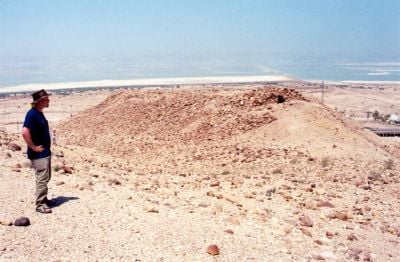
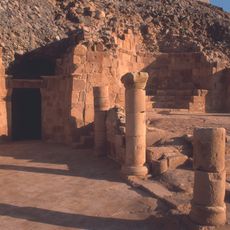
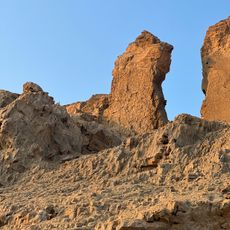
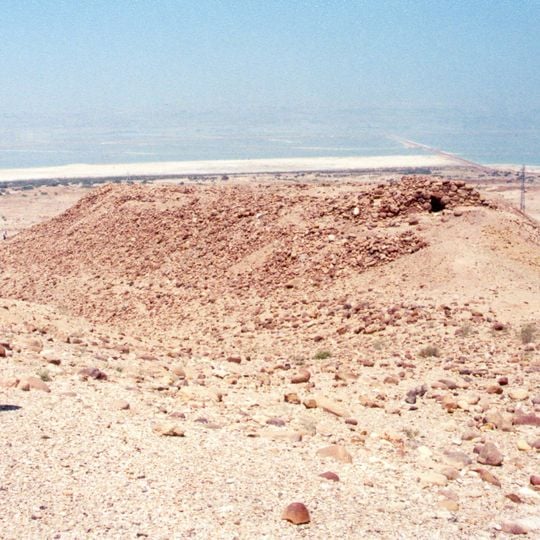
Numeira is a 0.5-hectare walled settlement of the Early Bronze Age on the southern bank of the Wadi Numeira, near the Dead Sea shore. Excavations between 1979 and 1983 uncovered fortification walls, residential and non-residential stone and mudbrick buildings, and storage pits; a non-domestic area stood at the western gate. Today a broad mound of reddish-brown earth and loose stones rises from pale, stony ground, with a cluster of larger dark stones and a small hollow on its upper right side.
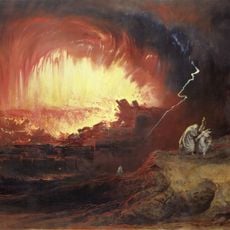
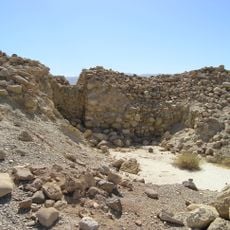
Numeira was occupied during the Early Bronze Age III, with calibrated radiocarbon dates spanning roughly 250 years, or 10 to 12 generations. Excavations between 1979 and 1983 uncovered a 0.5-hectare walled settlement on the south bank of the Wadi Numeira. It was violently destroyed around 2300 BC, though some scholars propose 2100–2050 BC, and was never reoccupied; one fortification tower collapsed and many doors were blocked up.
The site's name is shared with the adjacent Wadi Numeira, the river that now erodes the mound. Visitors can see the low, reddish earth and stone rubble of the unexcavated tell, with a dark hollow in the upper stones. Excavations found many doors blocked up in the final phase, suggesting the inhabitants barricaded themselves before the town burned.
The site is remote and requires careful navigation, so it helps to have a guide or prepare information beforehand. Access is possible, but facilities at the location are minimal.
The site sits about 280 meters below sea level, making it one of the lowest elevation archaeological locations on Earth. This extreme position reveals how ancient people adapted to living in harsh conditions.
The community of curious travelers
AroundUs brings together thousands of curated places, local tips, and hidden gems, enriched daily by 94,641 contributors worldwide.