Dazaifu, Administrative capital ruins in Fukuoka Prefecture, Japan
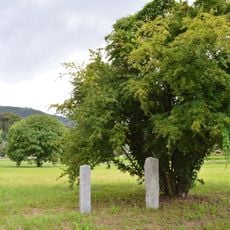
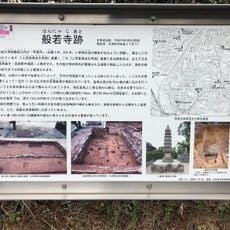
Dazaifu was the regional government headquarters of Kyushu, its administrative core now a Special Historic Site covering about 254,000 square metres in present-day Dazaifu and Chikushino cities. The government office block, called Tofuro ato, was rebuilt in three phases: the first from the late 7th to early 8th century, the second an朝堂院-style compound measuring 111.6 m east-west by 188.4 m north-south, and the third an enlarged version from the mid-10th to 12th century. Today low pale-grey stone foundation platforms lie flush with mown grass in straight rows, with small upright stone markers among them.
The administrative city emerged around the year 700 as the center of imperial power over Kyushu and managed diplomatic relations with the Asian mainland. For over five centuries it served as headquarters for military and civil administration of southern Japan.
The name Dazaifu derives from the title of the highest regional official, the Dazai no sochi, who governed Kyushu from this seat. The kanji 宰 means "to govern," and the alternative writing 太宰府 appears in documents from the Nara period onward. The nearby Dazaifu Tenmangu, dedicated to Sugawara no Michinaga, draws students who leave wooden ema plaques with wishes for exam success.
The government office foundations lie on the south side of Mount Shioji, about 1 km from the guest-house site that was added to the special historic site in 2014. The complex covers roughly 254,000 square metres, and the designated area now totals about 320,236 square metres. The site is open ground with mown grass and low stone edging; paths link the foundation rows.
A museum from 2005 displays regional finds in a modern building constructed into the mountainside. The architecture combines glass and concrete with the natural surroundings and allows views over the surrounding forests.
The community of curious travelers
AroundUs brings together thousands of curated places, local tips, and hidden gems, enriched daily by 92,722 contributors worldwide.