Kengun Shrine, Shinto shrine in Kumamoto Prefecture, Japan
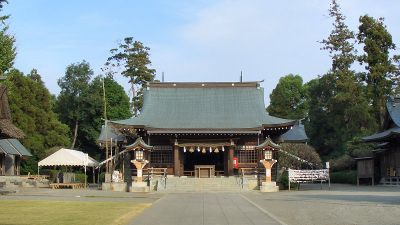
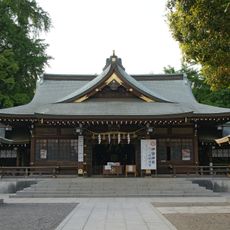
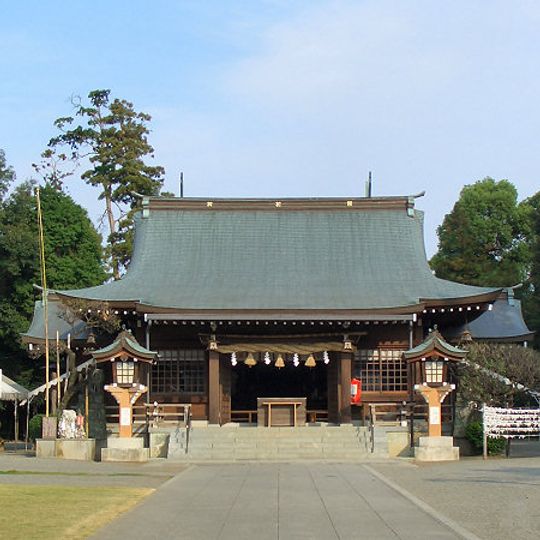
Kengun Shrine is a Shinto shrine in Higashi-ku, Kumamoto, the oldest in the city and one of the four Aso shrines. Its wooden worship hall has a long, dark grey-green gabled roof extending far to both sides, with a wide central entrance recess and lattice-window panels. A pale stone stairway leads up between two small lantern-topped structures, and a sacred rope with white zigzag paper strips hangs under the roofline.
According to shrine tradition, it was founded in 558, the 19th year of Emperor Kinmei, when an Aso Shrine governor unable to reach Aso in heavy snow was told by a boy to build a shrine here against enemies to the west. It became one of the four Aso shrines. In 1873 it was ranked a gōsha, and after the Meiji era the reading changed from Take-miya to Kengun.
The name Kengun comes from the shrine's founding legend: a governor bound for Aso Shrine was told in a dream to defend the west and call the shrine Kengun. The Higo Kagura, a local Shinto theatrical dance, is performed here and is a prefectural intangible folk cultural property. At Miwa Shrine within the grounds, people touch a stone with depressions resembling smallpox scars, hoping for relief.
The shrine sits in a residential part of Higashi-ku and is easy to reach on foot from nearby streets. As it is an active place of worship, visitors are expected to move quietly and dress modestly when walking through the grounds.
The nagare-zukuri style used here is actually the most common shrine building style in Japan, making this a very typical example of what most Japanese shrines look like. The extended front of the roof was originally designed to shelter worshippers who stood outside to pray, not just as a decorative choice.
The community of curious travelers
AroundUs brings together thousands of curated places, local tips, and hidden gems, enriched daily by 93,128 contributors worldwide.