Katō Shrine, Shinto shrine in Kumamoto Prefecture, Japan
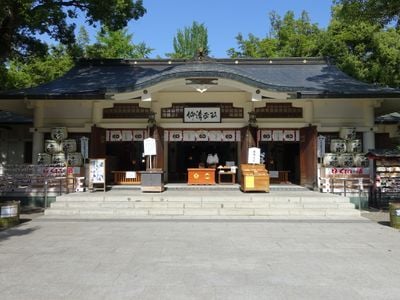
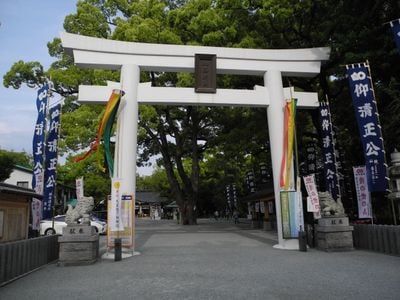
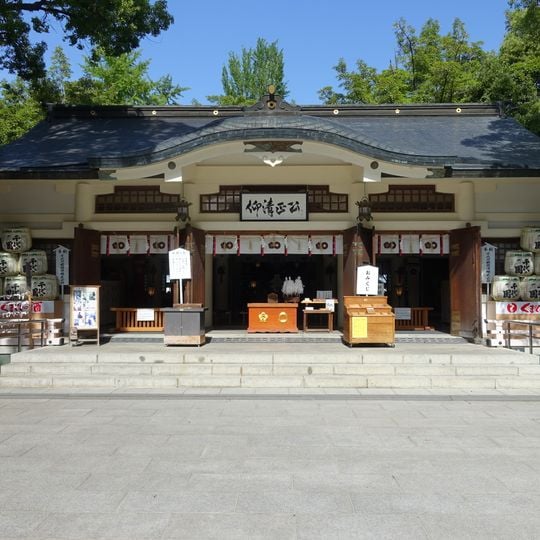
Katō Shrine is a single-story wooden shrine in Kumamoto Castle with a dark, curving nagare-zukuri roof that extends over a recessed cream facade. A gold-lettered plaque hangs above the entrance, which is flanked by pillars with paper streamers and white lanterns. Sake barrels and signposts stand to either side, and wide stone steps lead up to the porch.
The shrine began in 1611 as Jōchibyō, a memorial to Katō Kiyomasa at Honmyō-ji. In 1871, after the separation of Buddhism and Shinto, it became Nishikiyama Shrine inside Kumamoto Castle, enshrining Kiyomasa with Ōki Kaneyoshi and Kin Kan. Moved to Kyōmachi in 1874, it burned in the 1877 Satsuma Rebellion and was rebuilt by 1886. Renamed Katō Shrine in 1909, it returned to the castle grounds in 1962.
The shrine serves as a place where local visitors come to offer prayers and gratitude for daily matters like health and work. You can observe simple rituals like purifying hands and mouth at the entrance basin and leaving offerings at the altar.
The shrine sits in an urban neighborhood and is easily accessible if you are in the Chūō-ku area. Like all Shinto shrines, some areas are open to visitors while others are reserved for spiritual purposes only.
On the shrine grounds stands the Taiko bridge, a stone bridge brought from Korea as a memorial; it later served as a model for other stone bridges. A large washbasin once belonging to Ōki Kaneyoshi, one of the enshrined, is also kept here, along with a flag-holding stone brought from Nagoya in Saga Prefecture in connection with the Korean invasion.
The community of curious travelers
AroundUs brings together thousands of curated places, local tips, and hidden gems, enriched daily by 93,145 contributors worldwide.