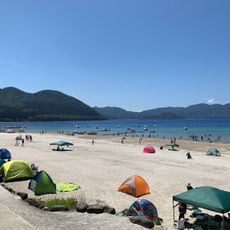
Akita-Komagatake, Active volcano in Towada-Hachimantai National Park, Japan
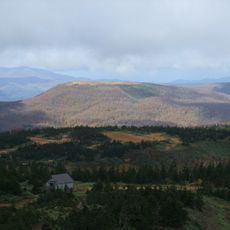
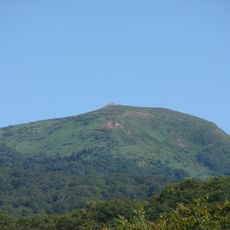
Akita-Komagatake is a volcanic mountain at the border between Akita and Iwate prefectures, composed of multiple peaks made from andesite and basalt rock. The main summit reaches approximately 1,600 meters and sits within Towada-Hachimantai National Park with numerous marked hiking trails.
The volcano last erupted between September 1970 and January 1971, marking the most recent volcanic activity in this section of Honshu. Since then, it has remained dormant and shaped the surrounding landscape.
The summit's alpine plant zone, with hundreds of species such as hinazakura, takanesumire, komakusa and ezotsutsuji, was designated a national natural monument in February 1926. The mountain was once a sacred peak closed to women, and a stone hokora shrine to Komagata deity still stands on Otake's summit; tradition says one must not look inside. The highest point, Onamedake at 1,637 m, takes its name from an old word for concubine, and legend holds that the wife peak Medake erupts in anger at her husband Otake.
Buses depart regularly from JR Tazawako Station toward Komagatake Eighth Station, with a journey of roughly one and a half hours. From the eighth station, hikers can access trails of varying difficulty levels.
The summit's highest point, Onamedake at 1,637 m, carries a first-class triangulation point. Its name comes from ona, an old word for concubine: legend says the main wife, Medake, sometimes erupted in anger because Otake kept a concubine. Near the summit of Otake stands a stone hokora dedicated to Komagata deity, which tradition says must never be looked inside.
The community of curious travelers
AroundUs brings together thousands of curated places, local tips, and hidden gems, enriched daily by 94,226 contributors worldwide.