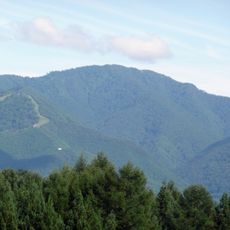
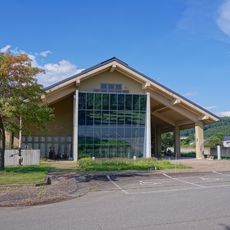
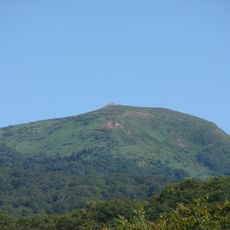
Akita-Yakeyama, Active volcano in Kazuno and Semboku, Japan
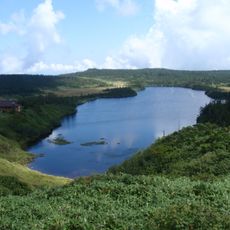
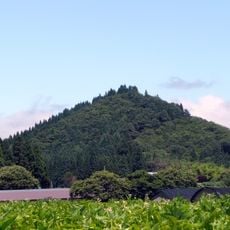
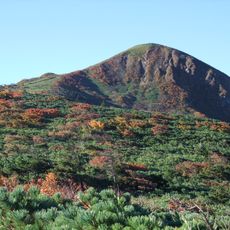
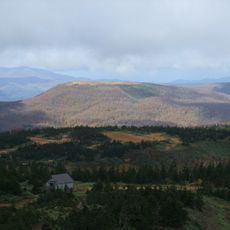
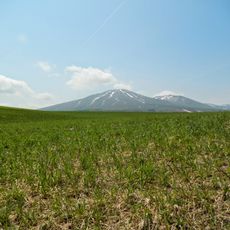
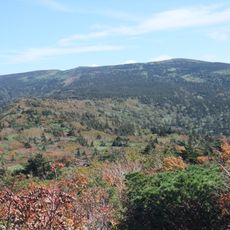
Akita-Yakeyama is an active volcano straddling the border of Kazuno and Semboku, rising to about 1,366 meters (4,480 feet). Its summit features a crater roughly 600 meters (1,970 feet) across, with a small lava dome called Onigajo standing at the center.
Akita-Yakeyama began forming about 500,000 years ago with the outflow of the Old Yakeyama lava flow; the main volcanic edifice was built between 73,000 and 34,000 years ago. Recorded eruptions since 1678 have been moderate phreatic events. In 1949 four vents at the Karanuma crater produced a mudflow about 0.8 m thick and 200 m long, and in 1997 eruptions struck Sumikawa-Onsen and the Karanuma crater.
The name Yakeyama means 'burning mountain', and the mountain is also called Kumazawayama and Iwoyama. A legend tells that the warrior Noborikimori held out on the Onigajo lava dome during the conquest of Oshu, though the sources note that Sakanoue no Tamuramaro never reached this area. Near the summit, a ditch dug by Abe Tosuke to collect yubana sulfur deposits once left Lake Yunuma without water during the Taisho era.
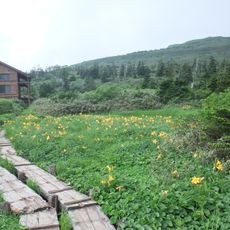
Trails start from Goshogake Onsen on the east side and Tamagawa Onsen on the west, with a bus linking the two for through-hikes. Entry off the marked paths is forbidden because of volcanic gas accidents. The route via Yunosawa passes the Karanuma crater, where eruptions and toxic gas have at times closed the path; it has recently reopened with ropes marking the way.
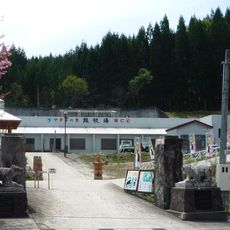
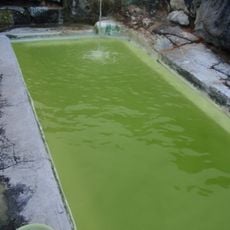
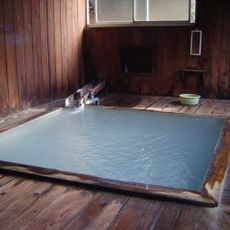
At the western base of the mountain sits Tamagawa spa, featuring hot springs with measurable radioactive properties and mineral-rich thermal waters. These heated sources have long drawn people seeking their therapeutic qualities.
The community of curious travelers
AroundUs brings together thousands of curated places, local tips, and hidden gems, enriched daily by 93,186 contributors worldwide.