Ikoma Shrine, Shinto shrine in Ichibuchō, Japan
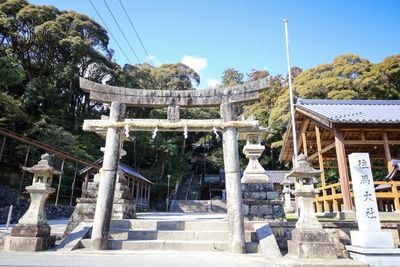
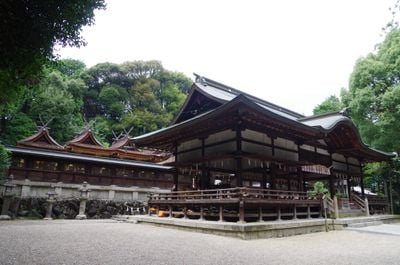
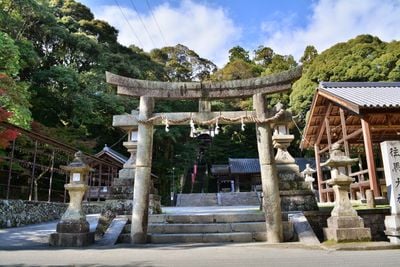
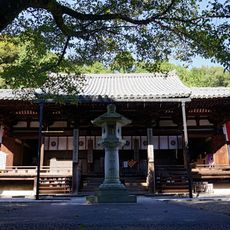
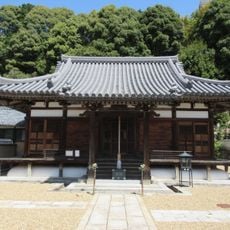
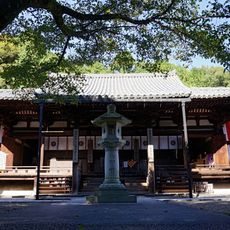
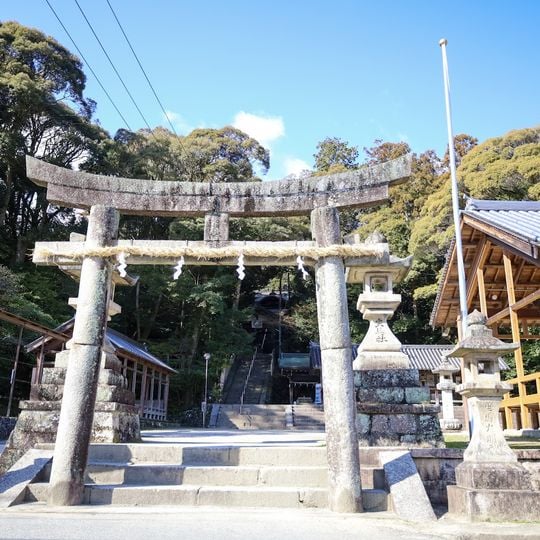
Ikoma Shrine, formally Ikomaniimasu-Ikomatsuhiko Jinja, has seven connected Kasuga-zukuri sanctuaries under one roof, their gables facing forward. The main hall is raised on a stone base with a dark tiled roof, open timber facade, white panels above the crossbeams, and a wooden railing; a lower roofed structure with a decorated gable stands to the left behind a low stone wall. A stone torii with a twisted straw rope and four paper streamers tops a short flight of wide steps.
The Sokoku-Fudoki records the shrine as already existing in 458, when Mount Ikoma itself was the object of worship. In 859 the Nihon Sandai Jitsuroku notes a rank of Junior Fifth Rank, Upper Grade for Ikomatsu-Hikohiko-no-Kami, and the 972 Engishiki lists it as a Kanpei-taisha of Heguri District, Yamato Province, receiving monthly and harvest offerings. In the Kamakura period five Hachiman deities were added to the two original kami, making seven; the Meiji separation of Buddhism and Shinto abolished its eleven jingū-ji and the shrine became a prefectural shrine.
The shrine is known for fire rituals: its sacred wood, called hahaka (today's uwamizuzakura cherry), was sent to the court for the Daijōsai enthronement rite. The October festival, Hi-matsuri (Fire Festival), has young men carrying torches race down the stone steps; Nara Prefecture lists it as an intangible folk cultural property. A Kannondō hall with an Eleven-faced Kannon statue, said to be by Unkei, survives from the era of Buddhist-Shinto fusion.
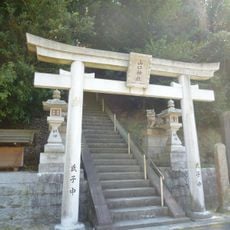
The shrine stands in Ichibuchō, a short walk from Kintetsu Ikoma Line's Ichibu Station; the approach passes the stone torii at the top of a flight of wide stone steps. Drivers reach the area via the Ikomayama bypass of Route 168 or the Ikomayama exit of the Daini-Hanna toll road.
The fire-drill wood (hikiriki) used at the Daijōsai enthronement rite came from this shrine, made from hahaka wood identified with the present-day uwamizuzakura (Prunus grayana). Records such as the Kitayamashō and Genyōki call the shrine's deity "Hikiriki-no-kami", and the shrine supplied the wood for Emperor Akihito's Daijōsai.
The community of curious travelers
AroundUs brings together thousands of curated places, local tips, and hidden gems, enriched daily by 94,447 contributors worldwide.