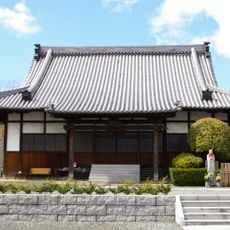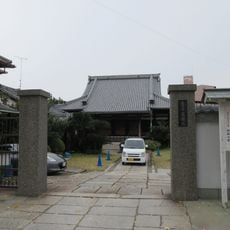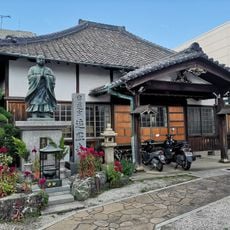
Hinokuma Shrine, Shinto shrine complex in Wakayama, Japan.
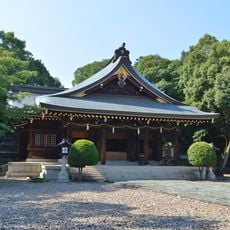
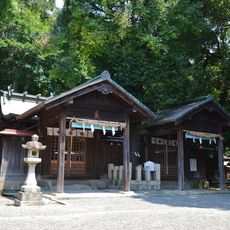
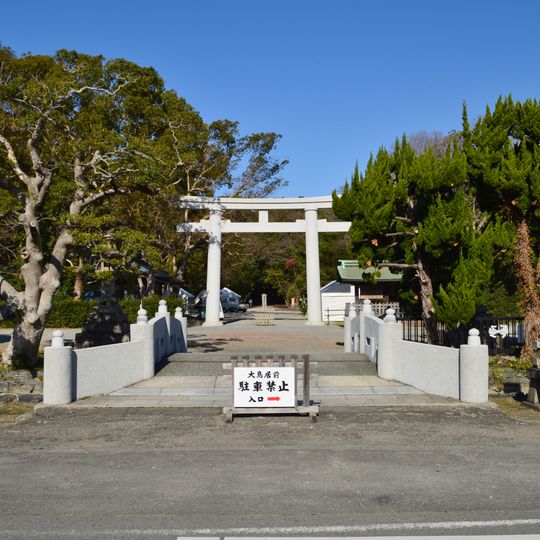
Hinokuma Shrine and Kunikakasu Shrine form a single precinct in Wakayama, entered through a large pale wooden torii with dark brown pillar bases and two crossbars, the upper slightly curved. Inside, Hinokuma Shrine stands to the left of the entrance and Kunikakasu Shrine to the right. A building behind the gate has a green-tiled hip-and-gable roof, partly screened by a low wooden fence with vertical slats.
According to shrine tradition, the mirrors Hinokuma and Kunikakasu enshrine were cast before the Yata-no-Kagami and given to Amenomichine-no-Mikoto, ancestor of the Kii clan, in the second year of Emperor Jimmu's reign. The shrine was moved to its present site in the 16th year of Emperor Suinin. Toyotomi Hideyoshi seized its lands in 1585 and destroyed the buildings; Tokugawa Yorinori rebuilt them in the Edo period. In 1871 both shrines were ranked kanpei taisha.
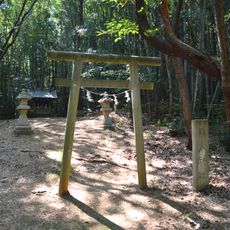
The two shrines take their names from their kami: Hinokuma no Ōkami, whose shintai is the Higata no Kagami, and Kunikakasu no Ōkami, whose shintai is the Hihoko no Kagami. Shrine tradition holds that Ishikori-dome no Mikoto cast both mirrors before the Yata no Kagami. The grounds also hold sessha such as Tendōne Shrine and Nakagoto Shrine, and massha including Fukakusa, Kuniyasu, Ichie and Matsuo shrines.
The shrine is accessible by local train service that stops nearby, making arrival straightforward for most visitors traveling in the region. The main celebration day in late summer draws crowds, so plan visits on quieter days if you prefer fewer people around.
The two shrines were never ranked in the shinkai system: neither Hinokuma nor Kunikakasu received a divine rank, an exception shared only with Ise Grand Shrine. The court treated them as shrines of separate standing, and in 1871 both were designated kanpei taisha.
The community of curious travelers
AroundUs brings together thousands of curated places, local tips, and hidden gems, enriched daily by 94,677 contributors worldwide.