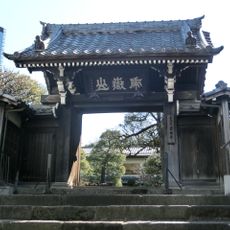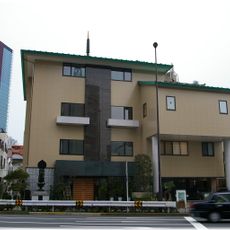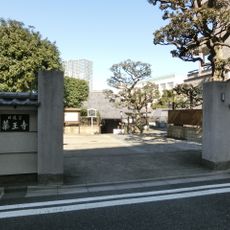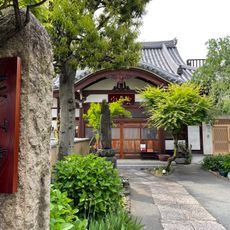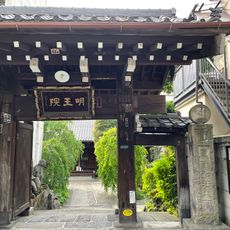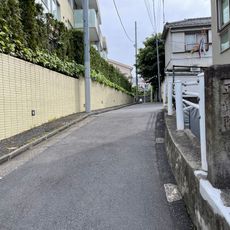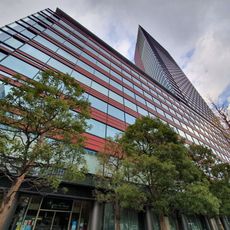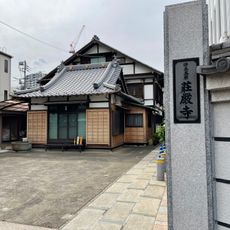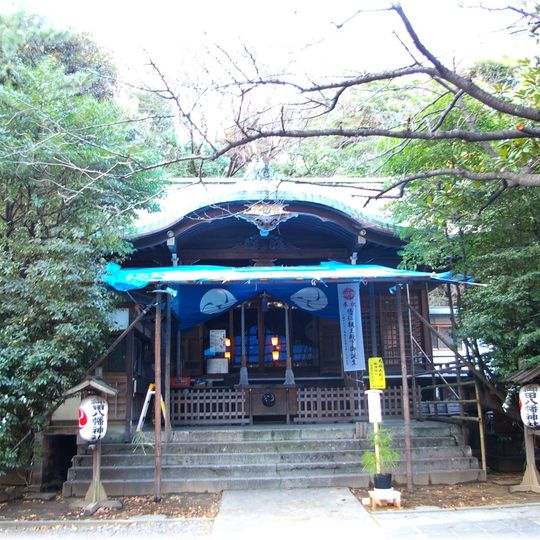
Mita Hachiman Jinja, Shinto shrine in Mita, Minato-ku, Tokyo, Japan
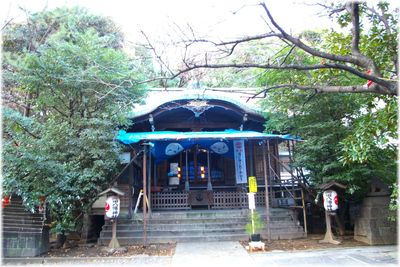
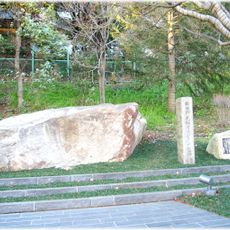
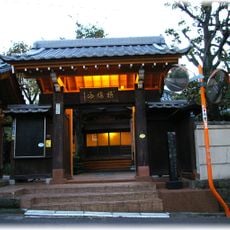
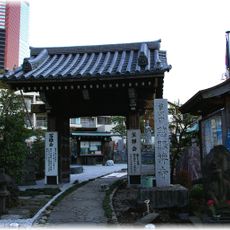
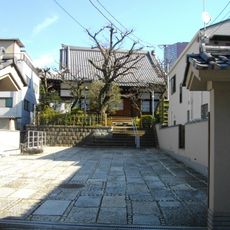
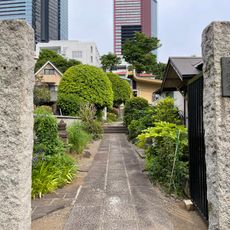
Mita Hachiman Jinja is a Shinto shrine at Mita 3-7-16 in Minato, Tokyo, on a slope facing the sea. Its precinct covers 2,975.9 square metres and holds a honden, heiden and haiden, plus the Kaguraden dance hall, Chozuya water basin and Shamusho office. Within the grounds stand Goko Inari Jinja and Mikage Jinja. Trees are pruned only minimally, and Kamezuka Park adjoins the higher ground behind.
Mita Hachiman Jinja was first enshrined in 709 at Mukaoka in Musashi Province as a guardian deity of the eastern provinces. In 1011 it was moved to the Mita district and venerated by the Watanabe clan of the Saga Genji. Tokugawa Ieyasu's entry into Edo Castle prompted the building of a new hall on the coast at Kamitakanawa, to which the shrine was transferred in 1662; that hall burned in 1668 and was rebuilt in 1672. The 1672 building was lost in the 1945 air raids and rebuilt in 1954.
The shrine brings together local residents, especially during the August festival when families perform traditional dances and share good wishes with one another. Visitors can observe people leaving wooden wish tags and purifying themselves at the water basin, showing how age-old customs remain woven into daily life.
The shrine is about a ten-minute walk from Tamachi Station and accessible via the Mita Line with an exit at Mita Station. Visitors should walk slowly, purify their hands at the water basin, and treat the sacred space respectfully.
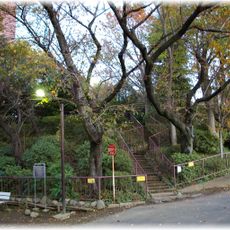
The shrine stands on a slope facing the sea; in the Edo period the Tōkaidō ran directly in front of it, with the shore of Edo Bay beyond, before land reclamation in Shibaura from around 1907 erased that view. Its trees are pruned only minimally, keeping the grounds dim. Neighbouring the rear height is Kamezuka Park.
The community of curious travelers
AroundUs brings together thousands of curated places, local tips, and hidden gems, enriched daily by 93,137 contributors worldwide.