Takanawa Great Wooden Gate, Archaeological site in Takanawa, Japan
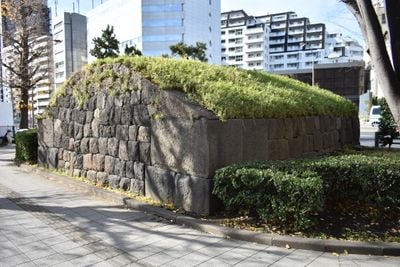
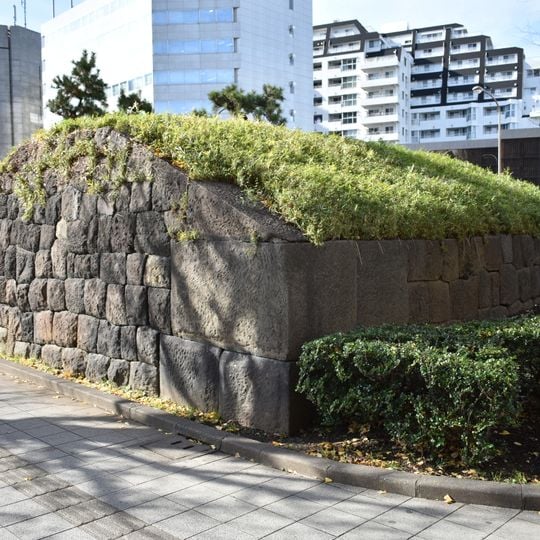
The Takanawa Great Wooden Gate site in Takanawa preserves the eastern stone wall of the gate that once marked Edo's southern entrance. The wall is built of large, rough-cut gray stone blocks laid in courses, with a stepped profile: the left portion rises higher, while a lower projecting corner juts forward on the right. Its flat top is covered with low green grass and weeds, and a dark green hedge stands in front of the lower right section.
The gate was built in 1710 by the Tokugawa Shogunate to control access along the Tokaido highway into Edo. This structure served as part of the strategic management of traffic entering and leaving the capital during that period.
The name Shibaguchi, used for the gate's first site, meant that from there on the road entered Shiba. In 1831 the notice board from Shibaguchi was moved here, and the old spot became known as Moto-fudanotsuji. The gate opened at the hour of dawn and closed at dusk, and travellers heading west along the Tōkaidō were seen off by parties held at shops on its north side.
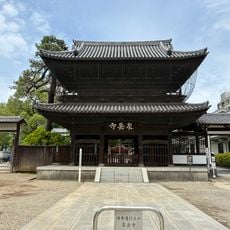
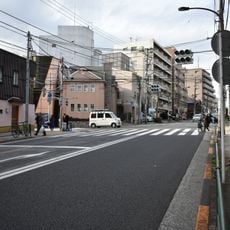
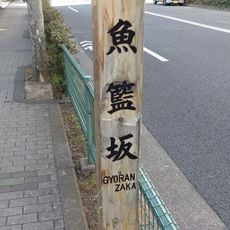
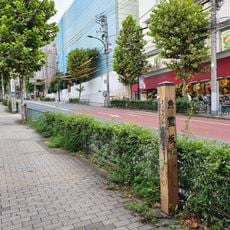
The remains are located near Sengakuji Station's A4 exit on the Toei Asakusa Line, with stone markers indicating the original position. The site is walkable and well-marked for visitors to find.
The surviving east stone wall was nearly demolished in the Meiji era: after the Yotsuya ōkido walls came down in 1876, some in the new government wanted this one gone too, but it was kept and designated a National Historic Site on 7 February 1928.
The community of curious travelers
AroundUs brings together thousands of curated places, local tips, and hidden gems, enriched daily by 94,089 contributors worldwide.