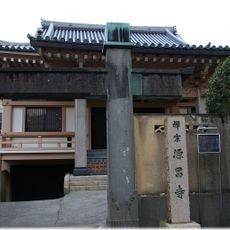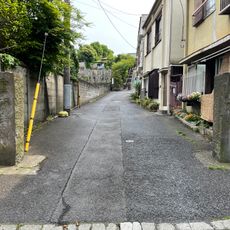
Sengaku-ji, Buddhist temple in Takanawa district, Tokyo, Japan
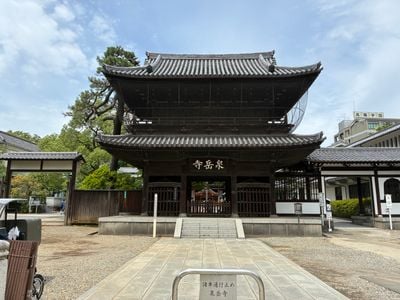
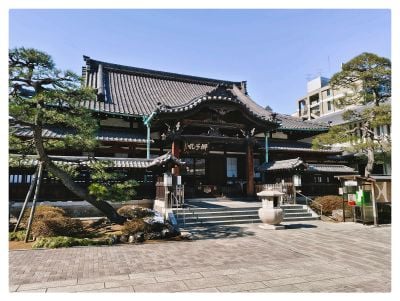
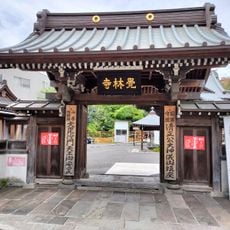
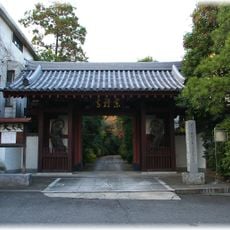
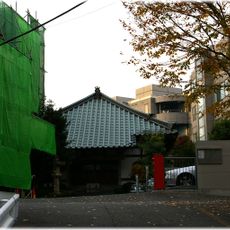
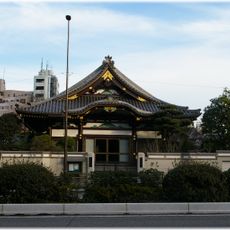
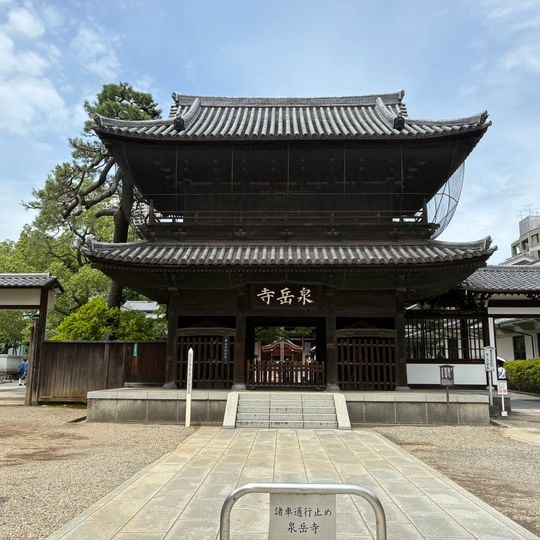
Sengaku-ji is a Sōtō Zen Buddhist temple in Takanawa, Tokyo. Its two-story wooden gate, rebuilt in 1832, has a ceiling carved with a copper dragon and a signboard reading 泉岳寺. The main hall, rebuilt in 1953 after wartime fire, stands behind broad stone steps, with a dark wooden facade and a curved gable over the entrance.
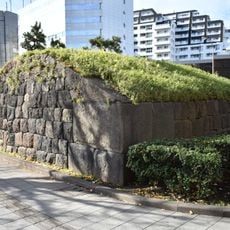
Founded in 1612 by Tokugawa Ieyasu near Sakuradamon, the temple burned in the Kan'ei fire of 1641. Iemitsu then ordered five daimyo clans—Mori, Asano, Kutsuki, Niwa and Mizutani—to rebuild it at Takanawa. Asano Naganori was buried here after his 1701 seppuku, and in 1703 the 47 rōnin who avenged him were buried beside him.
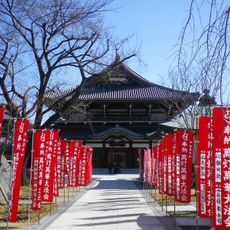
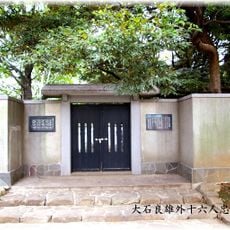
The temple calls the 47 rōnin "Akō gishi," and each grave's posthumous name begins with the character 刃 (blade). The 48 grave markers include a memorial for Kayano Shigezane, who killed himself before the raid. Festivals are held in early April and on 14 December, and the Akō Gishi Memorial Hall keeps their belongings.
The nearest station Sengakuji sits a short walk away on the Toei Asakusa Line. A small museum next to the main gate displays swords and personal items of the samurai.
An old well called Kubiarai-no-Ido still stands on the grounds and marks where the samurai performed ritual washing. There they cleaned the severed head of their enemy before offering it at their lord's grave.
The community of curious travelers
AroundUs brings together thousands of curated places, local tips, and hidden gems, enriched daily by 92,790 contributors worldwide.