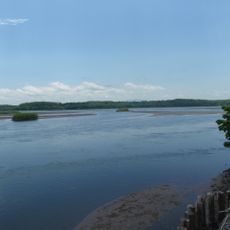
Lake Abashiri, Meromictic lake in Ozora, Japan.
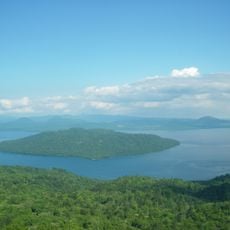
Lake Abashiri straddles Abashiri and Ozora in northeastern Hokkaido, within Abashiri Quasi-National Park. The Abashiri River enters from the south and leaves to the northeast, flowing 7 km to the Sea of Okhotsk; the Memanbetsu River and smaller streams also feed it. The Yobito Peninsula juts out from the east shore. The lake is meromictic: a freshwater upper layer makes up 46% of its volume, while saline water with about 10,000 ppm chlorine lies 10 m below the surface.
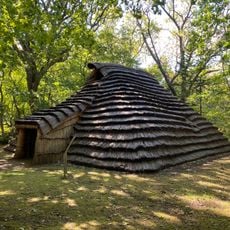
Core samples from the lake bed indicate the basin first formed about 20,000 years ago, during the last glacial period. Over the past 6,000 years the Abashiri River carved out the lake bed. Jōmon-period artifacts have been found near the Memanbetsu River. In modern times the Abashiri River's course was straightened for irrigation, causing serious siltation in the lake.
The lake's name is written 網走湖 in Japanese and read Abashiri-ko. In July, dragon boat races and a fireworks festival are held on the Memanbetsu lakeshore, and in summer visitors dig for corbicula clams there. During the winter ice season, anglers gather for wakasagi smelt fishing.
The lake lies between Abashiri and Ozora; National Routes 39 and 238 and the JR Sekihoku Line run along its shores, with Memanbetsu Station serving the Ozora side and Yobito Station the boat course. The surface sits at sea level, and in winter the lake freezes over from December to April with ice up to a metre thick. The boat course has a 1,000 m rowing lane certified by the Japan Rowing Association.
The lake is meromictic: a saline layer with about 10,000 ppm of chlorine sits 10 metres below the surface, while the freshwater upper layer makes up 46% of the lake's volume. In winter, reduced inflow lets seawater from the Sea of Okhotsk flow upstream into the lake.
The community of curious travelers
AroundUs brings together thousands of curated places, local tips, and hidden gems, enriched daily by 93,227 contributors worldwide.