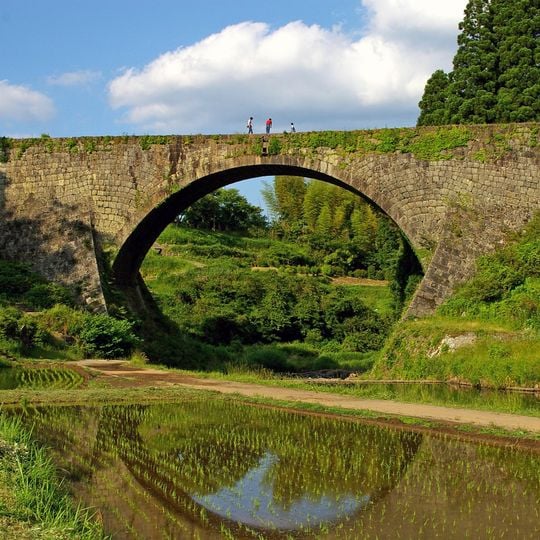
Tsūjun Bridge, Stone aqueduct bridge in Yamato, Japan
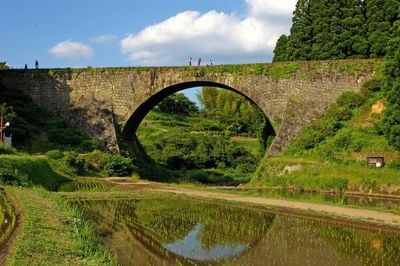
Tsūjun Bridge is a stone aqueduct that spans 84 meters across a valley in Yamato. Three pipes embedded in the stone run parallel through the structure and move water using a siphon system that relies on gravity to carry the liquid over the arched spans.
Yasnosuke Futa, a regional leader, ordered this crossing built starting in 1854 to supply rice terraces on the Shiraito Plateau with water. Its completion took about eight years and brought a noticeable rise in agricultural productivity across the area.
The original name translates to 'bridge with continuous pipes' in local dialect, describing its function clearly. Farmers from nearby communities gather here at set times to watch the water release together, a habit passed down through generations.
The upper platform is open to visitors and offers a direct view into the valley and the water channels. Demonstrations run regularly between spring and autumn when water flows through the old pipes, giving insight into how the system works.
This structure received National Treasure status in 2023 as the first civil engineering work in Japan to earn the title. Though over 160 years old, it remains actively used for irrigating surrounding rice fields, highlighting its continued practical value.
The community of curious travelers
AroundUs brings together thousands of curated places, local tips, and hidden gems, enriched daily by 91,724 contributors worldwide.