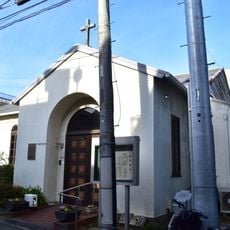
Yūten-ji, Buddhist temple in Naka-Meguro, Japan.
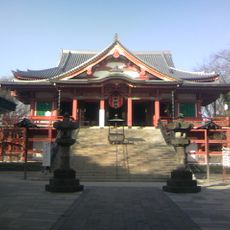
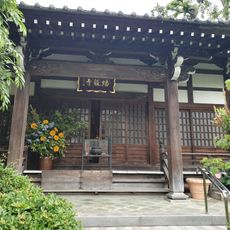
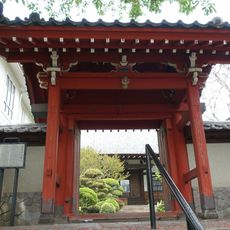
Yūten-ji is a Buddhist temple in Naka-Meguro within greater Tokyo, belonging to the Jōdo sect. The main gate, temple bell, and central hall have been registered as national tangible cultural properties and shape the appearance of the temple grounds.
Yūten, the 36th abbot of Zōjōji, fell ill in spring 1718 and died on 15 July 1718. His disciple Yūkai bought the damaged Zenkyū-in in Meguro for 100 ryō, became its abbot, and built Yūten's mausoleum and a Jōnenbutsu-dō there. The temple name Yūtenji was officially approved on 13 January 1723, with Yūten as founder and Yūkai as second abbot.
The temple is named after Yūten, the 36th abbot of Zōjō-ji, who died in 1718 and is venerated as its founder. His disciple Yūkai became the second abbot. The cemetery holds graves of the Yanagihara, Mori, Yamauchi and Shibusawa families, and the temple keeps the remains of about 700 Koreans, over half North Korean, including 521 victims of the 1945 Ukishima Maru sinking interred in 1971.
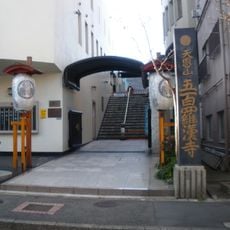
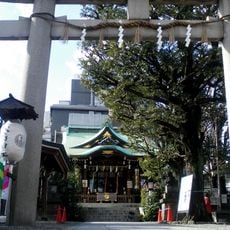
The temple is a five-minute walk from Yūtenji Station on the Tōkyū Tōyoko Line. The grounds hold two separate cemetery areas, and the graves of the Mōri family of Chōshū and the Arima family of Kurume stand beside the main gate. The main hall, study, Jizō Hall, Jizō Hall gate, front gate, water house and bell tower are registered national tangible cultural properties.
The temple keeps the remains of about 700 Koreans, including soldiers who fought for Japan in World War II and victims of the 1945 sinking of the repatriation ship Ukishima Maru. Japan's government interred 521 Ukishima Maru victims' remains here in 1971, and since the 2000s South Korea has negotiated repatriations; over half of those stored are North Korean, with no negotiations possible.
The community of curious travelers
AroundUs brings together thousands of curated places, local tips, and hidden gems, enriched daily by 93,170 contributors worldwide.