Honji Senju-ji Temple, Buddhist temple in Mooka, Japan.
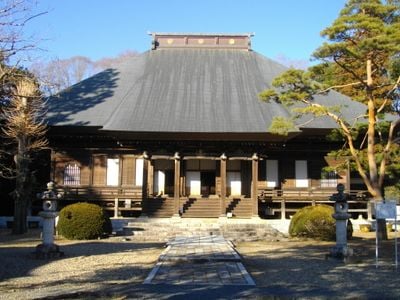
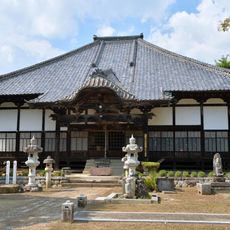
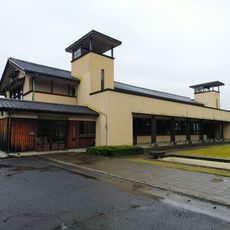
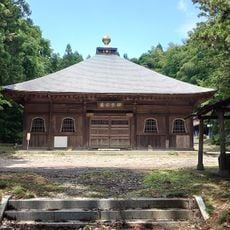
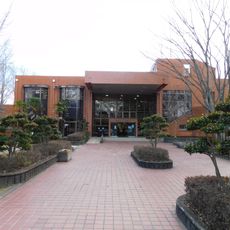
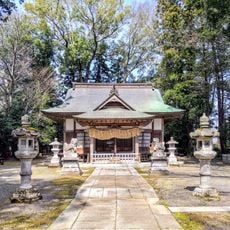
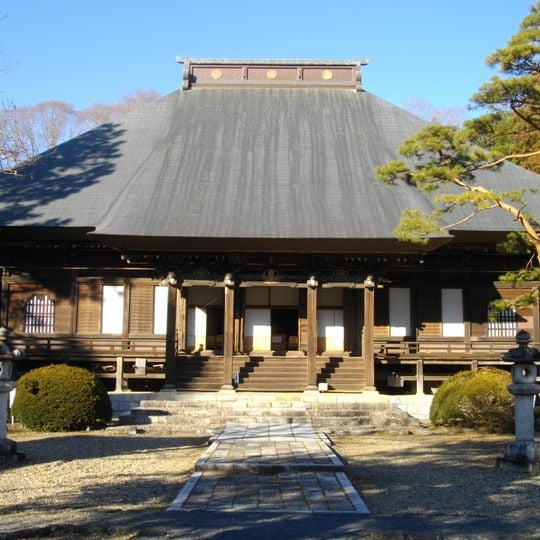
Honji Senju-ji is a Buddhist temple in Moka, Japan, spread across quiet grounds with several wooden buildings. The Nyorai-do from 1701 features curved roofs and dark lacquered pillars, while the entrance gate is decorated with carvings.
Shinran founded the temple in 1225 to teach his new interpretation of Jodo Shinshu Buddhism. The site became the center of the Takada school and attracted students from many parts of Japan.
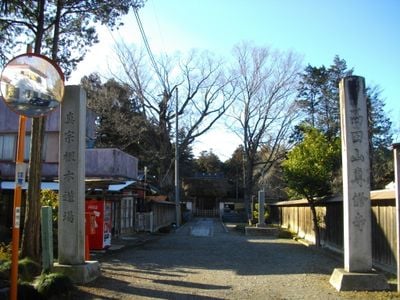
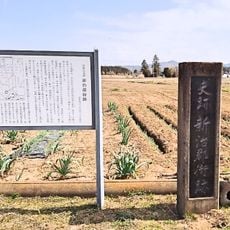
The name Senju-ji comes from senju nenbutsu, the single-minded recitation of the Buddha's name that defines Pure Land practice. The temple keeps a large share of Shinran's surviving handwritten documents, more than the East and West Hongan-ji temples, and for this reason the Takada branch does not use the Tannishō, a record written down by a disciple, as a sacred text. The stone pillar by the approach is carved with 真宗根本道場, "fundamental dojo of the True Sect".
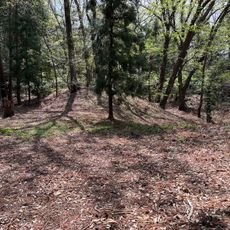
The precinct was designated a National Historic Site in 1967. The stone pillar near the entrance bears the inscription 真宗根本道場, marking the temple as a fundamental dojo of the Takada branch. Gravel paths connect the halls, and the grounds are open to walk around.
The temple holds about 40 percent of all surviving documents written in Shinran's own hand, more than the Higashi and Nishi Hongan-ji temples combined. Because of this, the Takada branch does not use the Tannishō, a record of Shinran's words set down by a disciple, as a sacred text.
The community of curious travelers
AroundUs brings together thousands of curated places, local tips, and hidden gems, enriched daily by 93,269 contributors worldwide.