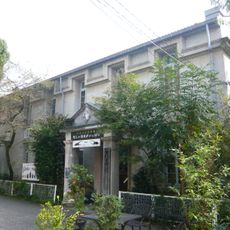
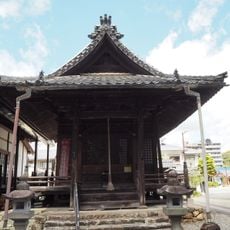
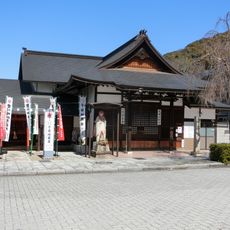
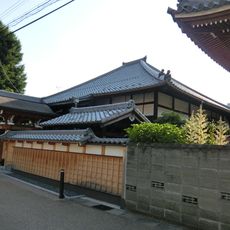
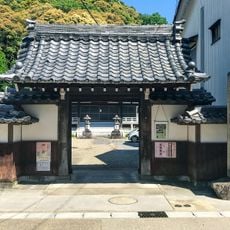
Shōhō-ji, Buddhist temple in Gifu, Japan.
Shōhō-ji, officially Kinpōzan Shōhō-ji, is an Ōbaku school temple in Ōbutsu-chō, Gifu, and a branch temple of Mampuku-ji in Uji, Kyoto. Its buildings and sacraments follow Chinese models rather than those of most Japanese temples, and the grounds are larger than an average temple's. The main image is a Shakyamuni Buddha known as the Gifu Great Buddha, housed in the Daibutsuden hall.
Founded in 1638 by the monk Kōon, the temple converted to the Ōbaku school in 1692 under the monk Sentai, who established its Chinese-style buildings. In 1790 the 11th head priest Ichū began planning a great Buddha modeled on Nara's Tōdai-ji; he died in 1825 before its completion in 1832 by the 12th head priest Kōsō.
The temple belongs to the Ōbaku school, whose Chinese-style rites and architecture set it apart from most Japanese temples. In the precinct, the Kōhōen hall serves fucha ryōri, the Chinese-influenced vegetarian cuisine of Ōbaku temples, which must be booked at least two days ahead. The magician Mr. Maric played in these grounds as a child, and the abbot Kobayashi Kōdō was a childhood playmate of his.
From JR Gifu or Meitetsu Gifu Station, take a Gifu Bus bound for Gifu Park and Nagara Bridge (for example the Takatomi line) and get off at Gifu Koen, Rekishi Hakubutsukan-mae, about a 5-minute walk away. For the return trip, board at the Daibutsu-minami, Myosho-ji-mae stop. The free car park holds only a few vehicles. Hours are 9:00 to 18:00 from April to October and 9:00 to 17:00 from November to March.
The temple's official name is Kinpōzan Shōhō-ji, and it is a branch temple of Mampuku-ji in Uji, Kyoto. The Great Buddha inside was built from donated sutra books: the 11th head priest, Ichū, began collecting them around 1791, and the 12th priest, Kōsō, completed the statue in 1832.
The community of curious travelers
AroundUs brings together thousands of curated places, local tips, and hidden gems, enriched daily by 93,319 contributors worldwide.