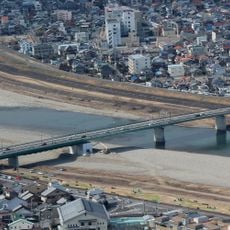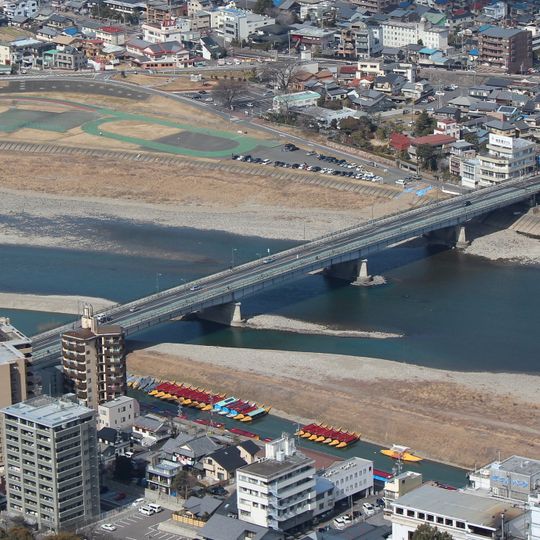
Nagara Bridge, Steel bridge across Nagara River in Gifu, Japan.
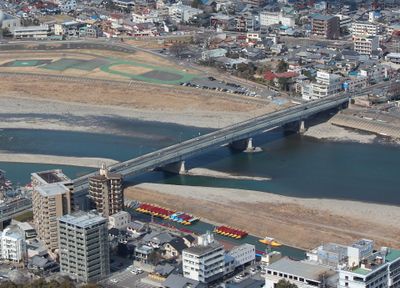
Nagara Bridge is a steel structure spanning about 272 meters across the Nagara River, featuring steel plate girders with separate lanes for vehicles and pedestrians. The construction connects both shores and allows safe passage with dedicated spaces for different types of traffic.
The first bridge here, built in 1874, was named Meiji Bridge (明七橋) after the era year; it was a wooden structure that ran only partway from the south bank, with the remaining gap crossed by planks laid over twelve linked boats, and it charged a toll. A full wooden bridge to the north bank followed in 1884, damaged by the 1891 Nōbi earthquake. Gifu Prefecture funded a third bridge in 1901, making crossing free, and in 1915 a steel truss bridge with British steel and a cypress deck carried the new tram line. The current bridge opened in December 1954.
The bridge serves as a viewpoint for traditional cormorant fishing, where fishermen use trained birds to catch fish in the waters below. This ancient practice remains an integral part of how the place is experienced and used by both locals and visitors.
The structure includes flood prevention gates on both shores to protect nearby areas during periods of increased river flow. The bridge is accessible to both vehicles and pedestrians, with clear pathways for each, making it suitable for various travel needs.
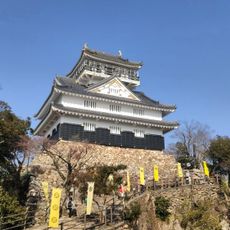
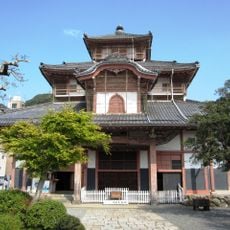
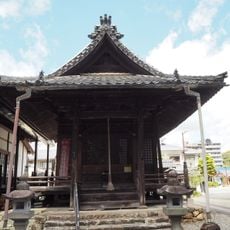
The three-storey pagoda in Gifu Park was built using timber salvaged from the third Nagara Bridge, a wooden truss structure erected in 1901 and replaced in 1915. Look for it on the hill near Gifu Castle's base.
The community of curious travelers
AroundUs brings together thousands of curated places, local tips, and hidden gems, enriched daily by 93,498 contributors worldwide.