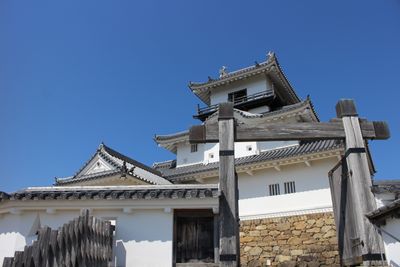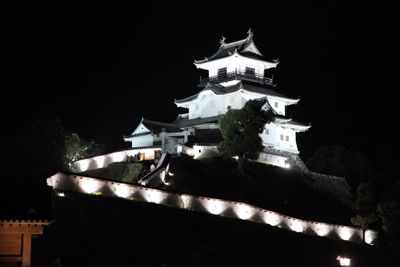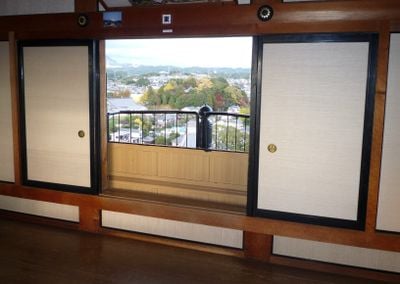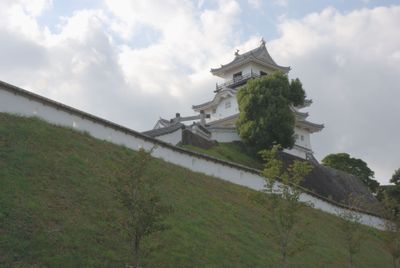
Kakegawa Castle, Japanese castle in Kakegawa, Japan.
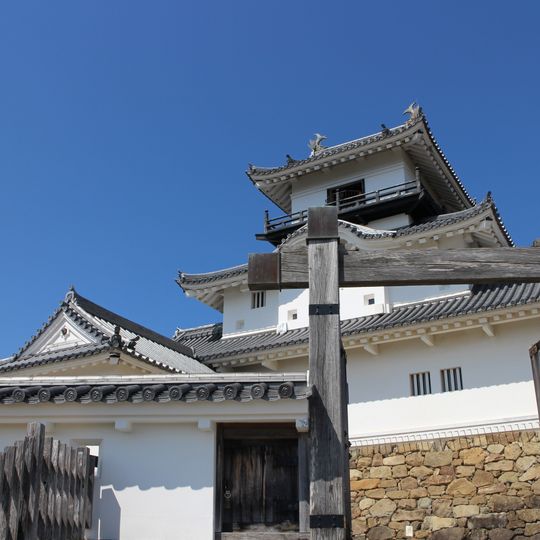
Kakegawa Castle is a Japanese fortress in Kakegawa, Japan, sitting on a hill with stone walls and several defensive levels. The structure follows the traditional building style of Japanese fortifications made from wood and stone, with a multi-story tower as the highest point of the complex.
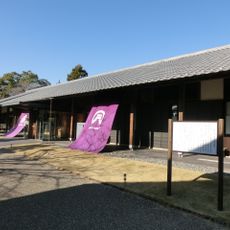
Asahina Yasuhiro built the original fortress between 1469 and 1487 to control the strategic Tokaido road linking Kyoto with the east. Later, the Ninomaru palace served during the Edo period as living quarters for the feudal lords who ruled the region from here.
The castle takes its name from the town of Kakegawa, not from a mountain. Since 1957, a drum-beating ceremony has been held at noon on June 10, Time Day, recalling the large drum made in 1855 by the Ōta clan that told time until the mid-Meiji era. The drum tower moved from the Sannomaru to the Honmaru still stands on the grounds.
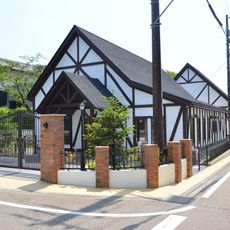
The castle is about a seven-minute walk north from the north exit of JR Kakegawa Station. The roughly 500-metre approach from the station and the surrounding shopping streets have been given a castle-town look, with tiled roofs, namako walls, stone-slab paving and buried power lines. The keep and the surviving palace are entered on one ticket.
The 1994 restoration made this site the first Japanese castle built after centuries using only wood throughout. The construction followed old methods without concrete or steel, which sparked debate among specialists at the time and now serves as a model for other projects.
The community of curious travelers
AroundUs brings together thousands of curated places, local tips, and hidden gems, enriched daily by 94,564 contributors worldwide.