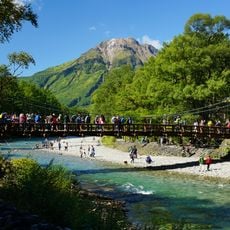
Mount Jōnen, Mountain summit in Nagano Prefecture, Japan.
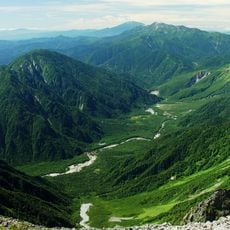
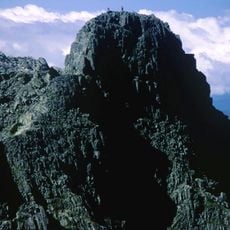
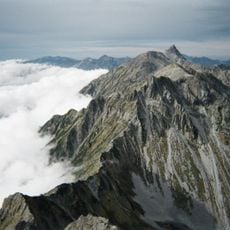
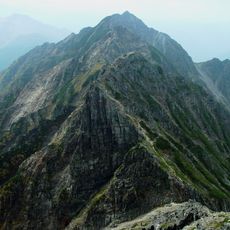
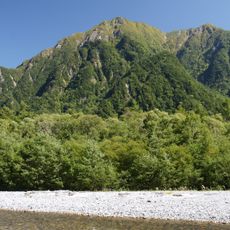
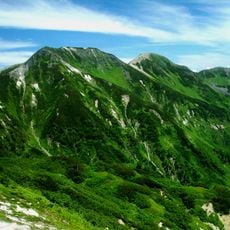
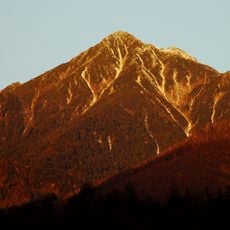
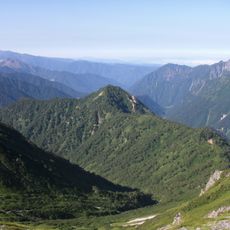
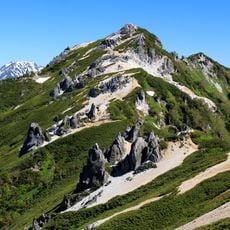
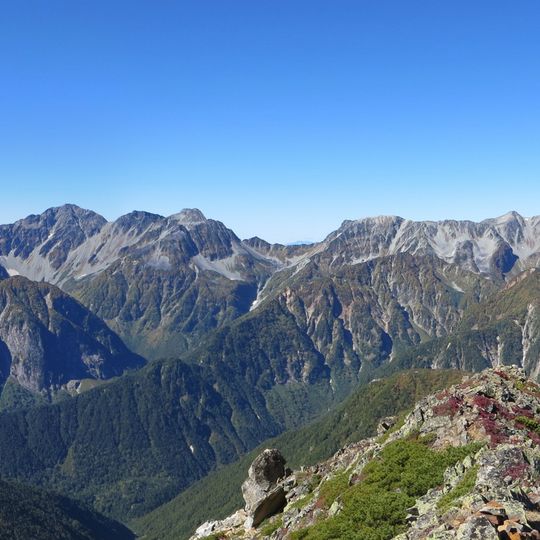
Mount Jōnen is a summit in the Northern Japanese Alps with a pronounced pyramidal silhouette that stands out distinctly from neighboring peak formations. Its location between two well-known neighboring mountains makes it an important landmark within the broader mountain range.
Walter Weston made the first non-Japanese ascent on 8 August 1894, having resolved to climb after seeing the peak from Bohoji Pass in 1891. Usui Kojima summited in 1906 and published the travelogue Shinano Jōnen-dake the following year. In 1919 the Jōnen Hut opened at Jōnen-Nokkoshi, and Kyūya Fukada stayed there and climbed the mountain in 1922. The area became part of Chūbu-Sangaku National Park on 4 December 1934.
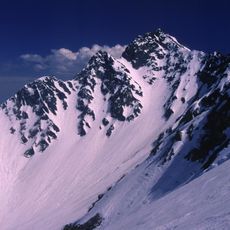
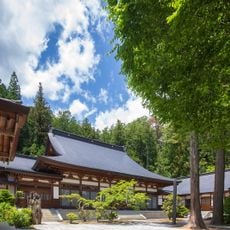
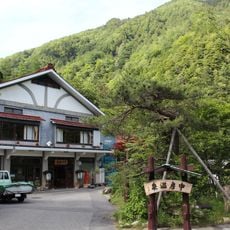
The name Jōnen is tied to the Jōnen-bō snow shape: in spring a dark patch on the snow slope of Mae-Jōnen, northeast-east of the summit, resembles a monk holding a sake bottle, and it marked the rice-planting season in Azumino. Mountain photographer Tabuchi Yukio, an honorary citizen of Azumino, presented it in his book on snow shapes. Local middle schools still make an overnight school climb to Jōnen Hut.
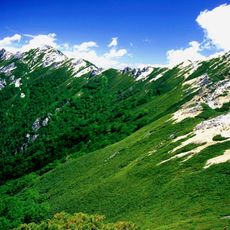
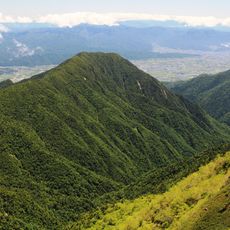
Several hiking routes of varying difficulty lead through the area, with some trails reaching the summit directly while others traverse ridge lines connecting to neighboring peaks. Summer and early autumn offer the most favorable conditions for visiting this mountain terrain.
The summit holds a small stone shrine and a direction diagram, and the rock face on the left of the ridge carries a faint trail line. The peak's granite blocks differ from the Paleozoic rocks on the south side, separated by a clear boundary; the Jōnen fault runs on the east flank.
The community of curious travelers
AroundUs brings together thousands of curated places, local tips, and hidden gems, enriched daily by 93,730 contributors worldwide.