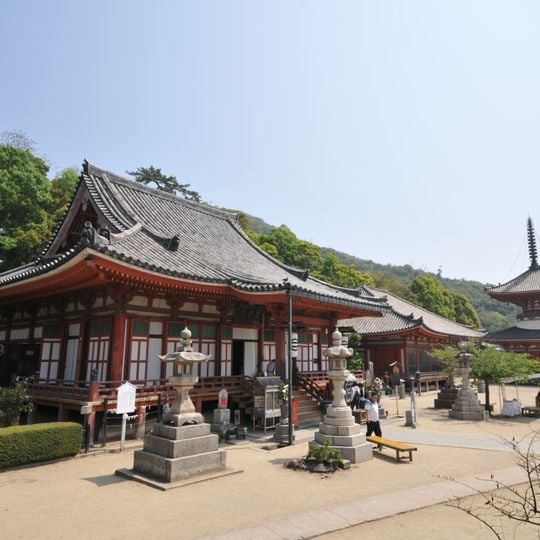
Jōdo-ji Temple, Buddhist temple in Onomichi, Japan
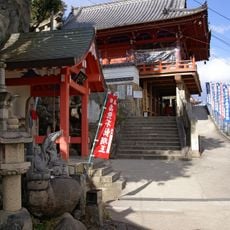
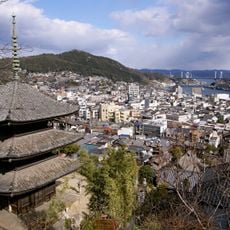
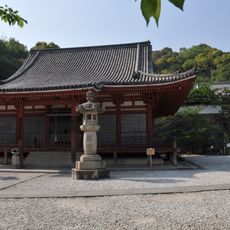
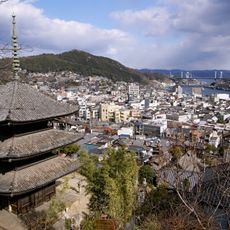
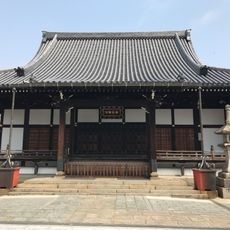
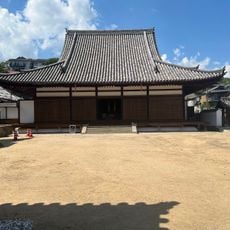
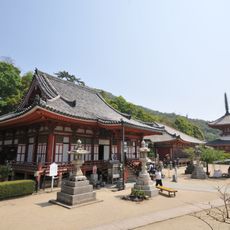
Jōdo-ji is a Buddhist temple situated on a hillside in Onomichi, featuring a main hall and two-story pagoda that both hold the status of National Treasure of Japan. The grounds display the characteristic layout and architectural style typical of temples from its founding era.
Tradition credits Prince Shōtoku with founding the temple in 616, though documents mention it only from the mid-Kamakura period, when it lay nearly unguarded. The monk Jōshō, a disciple of Eison, revived it in 1306; after a fire in 1325 the Onomichi merchants Dōren and Dōshō funded its rebuilding. The main hall (1327) and treasure pagoda (1328) survive from that reconstruction. In 1336 Ashikaga Takauji prayed here on his way to Kyūshū and donated 33 waka poems.
Jōdo-ji is the 9th of the 33 temples on the Chūgoku 33 Kannon Pilgrimage, dedicated to an Eleven-faced Kannon statue kept hidden and called the "substitute Kannon". The temple keeps the Ashikaga clan crest, two horizontal bars, as its own crest, and a stone pagoda honours Ashikaga Takauji.
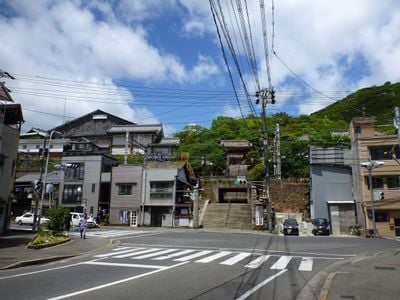
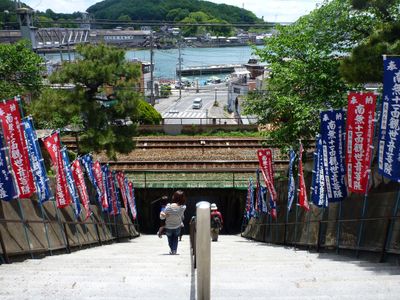
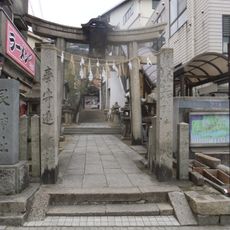
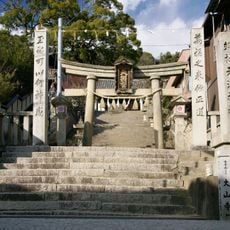
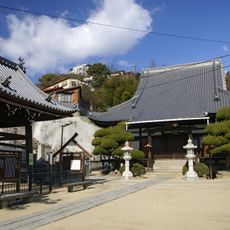
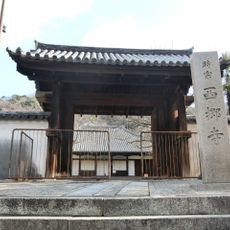
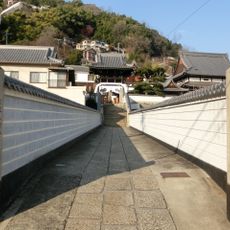
The temple stands halfway up a hill, not on the summit: from the street a stone stairway climbs through a stone-walled terrace to the precinct, and the grounds run east–west with the main hall facing the front gate. The plaza opens toward the Inland Sea, so the walk up is short but stepped.
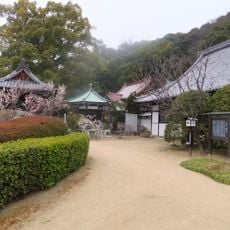
The tea house Roteki-an, donated in 1814 by the Tomishima family of Mukaishima, stands on an artificial hill at the top of the garden laid out in 1806. Its origin inside Fushimi Castle is unconfirmed; the building has a three-mat guest space and a daime-style host seat.
The community of curious travelers
AroundUs brings together thousands of curated places, local tips, and hidden gems, enriched daily by 93,315 contributors worldwide.