Jōdo-ji, Buddhist temple in Matsuyama, Japan.
Jōdo-ji is a Buddhist temple in Matsuyama featuring traditional Japanese architecture with a main hall built in 1482 that displays regional religious architectural elements. The structure reflects the building practices and design preferences typical of that era in the area.
Buddhist monk Gyōki founded the temple in its early days, but it was destroyed in 1416 during regional upheaval. The Kōno clan then rebuilt it, establishing the form it maintains today.
This temple serves as the 49th stop on the Shikoku pilgrimage route and ranks among the thirteen key Buddhist sites in the Iyo region. Pilgrims still visit regularly, making it an active place of spiritual practice today.
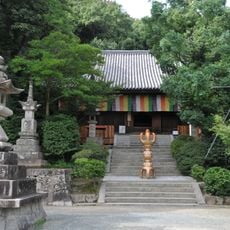
Jōdo-ji stands in Takanoko-machi, about 0.4 km from Kume Station on the Iyo Railway Yokogawa Line. The grounds are entered through the Niō-mon; beyond it a stone stairway climbs past a purification basin and a Benzaiten shrine to the Hondō, with the Daishidō on the right and the Amida-dō and Aizen-dō on the left. Parking is available for 20 cars and 4 large vehicles.
Ink inscriptions left by pilgrims survive on the cabinet inside the Hondō; the oldest bears the date 1525 (Daiei 5). Sixteenth-century graffiti also shows that Tendai priests and peasants had joined the pilgrimage by then.
The community of curious travelers
AroundUs brings together thousands of curated places, local tips, and hidden gems, enriched daily by 94,179 contributors worldwide.