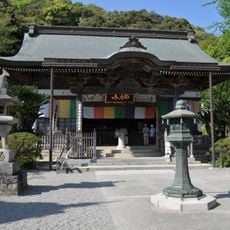
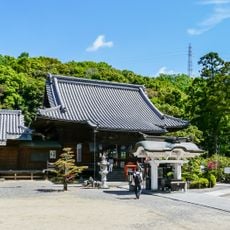
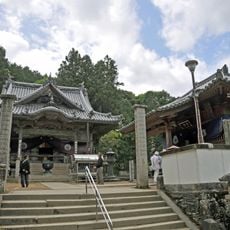
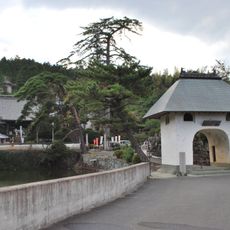
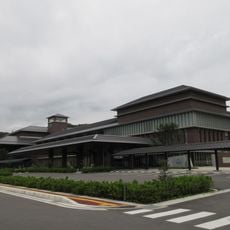
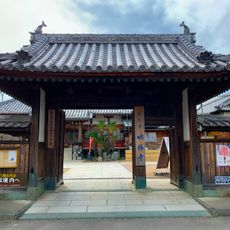
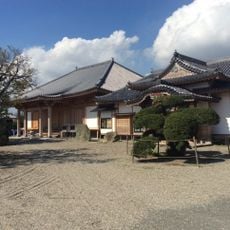
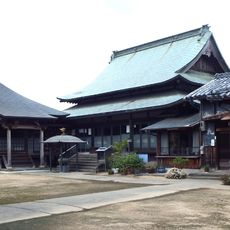
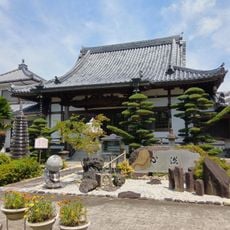
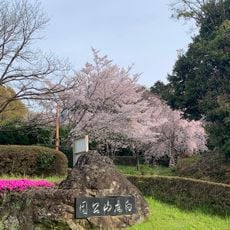
Jūraku-ji, Buddhist temple in Awa, Japan.
Jūraku-ji is a Buddhist temple in Tokushima Prefecture and serves as the seventh stop on a pilgrimage route across Japan. The main hall houses a statue of Amida Nyorai, and the grounds include religious buildings and garden areas used for worship and visitor reflection.
According to temple tradition, Kōbō Daishi stayed here, carved an Amida Nyorai from camphor and founded the temple, originally at Dōgahara in Jūraku-ji-dani, about 3 km from the present site. In 1582 Chōsokabe Motochika's troops burned the extensive seven-hall complex; the priest Shinnen and a disciple carried out the main image and other sacred objects, but the disciple was shot dead by an arrow. The temple was rebuilt on its current location in 1635.
The name Jūraku-ji combines ji (temple) with jūraku, the ten joys of rebirth in the Pure Land that Kōbō Daishi sought when he named the mountain Kōmyōzan. The gōeika pilgrims sing asks to leave the eight sufferings behind and reach the nine grades and ten joys. Below the steps to the Daishidō stands the Jizō revered for healing eye disease.
The temple has a shukubō lodging for up to 120 people. Parking is free, with space for 30 cars and 5 buses. From JR Shikoku's Itano Station it is 9.7 km, and 6.4 km from Ushijima Station; the Tokushima Bus Kajiwarabara line stops at Higashibara, 0.8 km away. By car, take the Tokushima Expressway to the Donari IC, 2.3 km from the temple.
The main image is a seated Amida Nyorai said to date from the Kamakura period, flanked by standing Kannon and Seishi statues. A replica of the main image is coloured the opposite way: the body is green, while the pedestal and halo are gold.
The community of curious travelers
AroundUs brings together thousands of curated places, local tips, and hidden gems, enriched daily by 94,478 contributors worldwide.