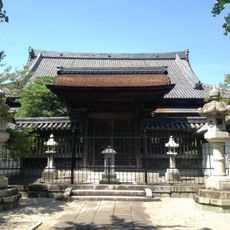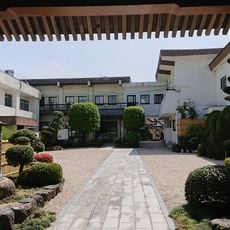
Kurume Suitengū, Shinto shrine in Kurume, Fukuoka Prefecture, Japan
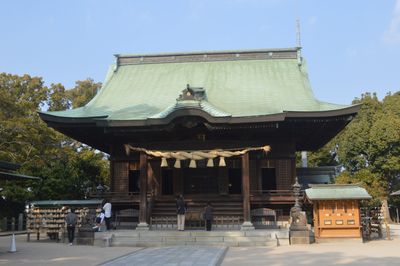
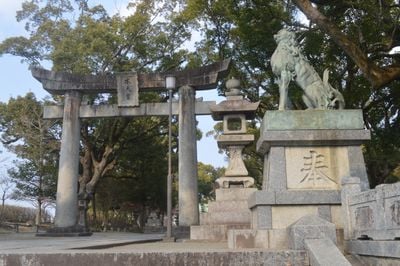
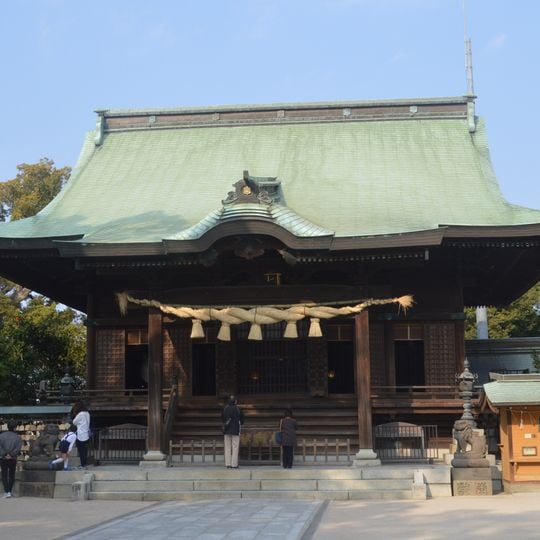
Kurume Suitengū is a Shinto shrine in Kurume, Fukuoka Prefecture, and the head shrine of all Suitengū shrines in Japan. Its main hall has a broad, gently sloping green copper roof with a raised curved gable, and a twisted straw rope with four white zigzag paper streamers hangs across the front. A stone stairway leads up to the entrance, and a grey stone torii gate bearing the characters 水天宮 stands at the approach.
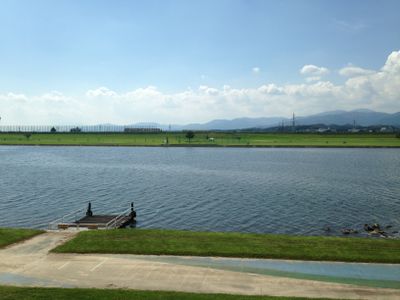
The shrine was founded in 1190 by a noblewoman named Azechi no Tsubone from Ise, who fled to this area following the Battle of Dan-no-Ura. It was relocated to its current location in 1650, where it has since overlooked the Chikugo River.
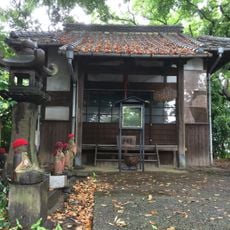
The shrine connects to Kappa legends, the mythical water creatures of Japanese folklore that appear in toy form at local shops nearby. Visitors experience this water-centered tradition through everyday rituals like lighting incense and leaving flower offerings at small altars throughout the grounds.
The shrine sits about a 10-minute walk from Kurume Station and is accessible by car in approximately 20 minutes from the main highway. Parking spaces are available on-site, including accessible spots for people with disabilities, and bus routes also serve the location.
Maki Yasuomi, the 22nd head priest, was a loyalist activist executed in 1864, not a samurai. His bronze statue, erected in 1915, was melted down during the Pacific War and recast in 1968 for the centenary of his death. Beside Maki Shrine stands a replica of Sanshika, the cottage where he planned the overthrow of the shogunate.
The community of curious travelers
AroundUs brings together thousands of curated places, local tips, and hidden gems, enriched daily by 94,229 contributors worldwide.