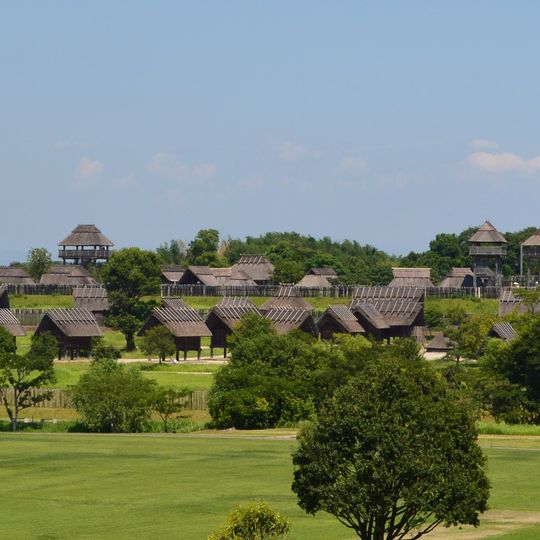
Yoshinogari site, Archaeological site and historical park in Saga Prefecture, Japan
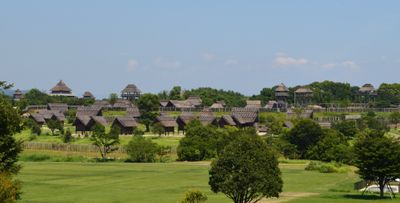
Yoshinogari is a Yayoi-period moated settlement site in Saga Prefecture, now part of a historical park. Reconstructed pit dwellings with thatched roofs, raised-floor storehouses, and tall watchtowers stand on the Yoshinogari hills, linked by low wooden fences. The site spans about 117 hectares and includes a double moat system.
The site's earliest Yayoi component dates to before 400 BCE, when a small settlement with a ditch-enclosure formed at the southern end of the low hill. In the middle Yayoi period moats encircled the hills and large burial mounds appeared, and by the late period a double moat enclosed about 40 hectares, with the North and South Inner Blocs holding ritual buildings. Around the 3rd century the settlement peaked with an estimated 1,200 residents, then was abandoned in the Kofun period.
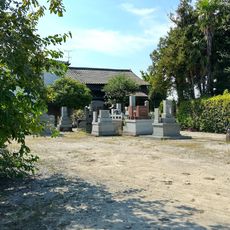
Reconstructed granaries and ritual spaces show how residents stored their harvest and conducted ceremonies. Burial grounds reveal how the community honored their dead and what objects they placed with them.
The park offers educational programs and hands-on displays that help visitors understand ancient life. Well-kept paths connect the different zones and make the walk around easy to follow.
A moat stretching over two kilometers surrounds the complex and ranks among the largest known defense systems from ancient Japan. The width and depth of the ditch show how much work the community put into protecting their settlement.
The community of curious travelers
AroundUs brings together thousands of curated places, local tips, and hidden gems, enriched daily by 94,121 contributors worldwide.