Lake Hyōko, Bird sanctuary in Agano, Japan
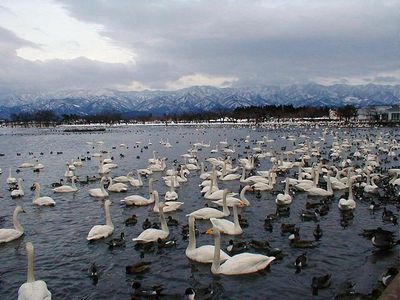
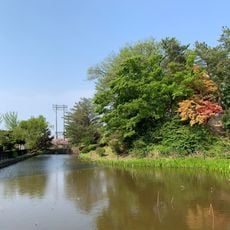
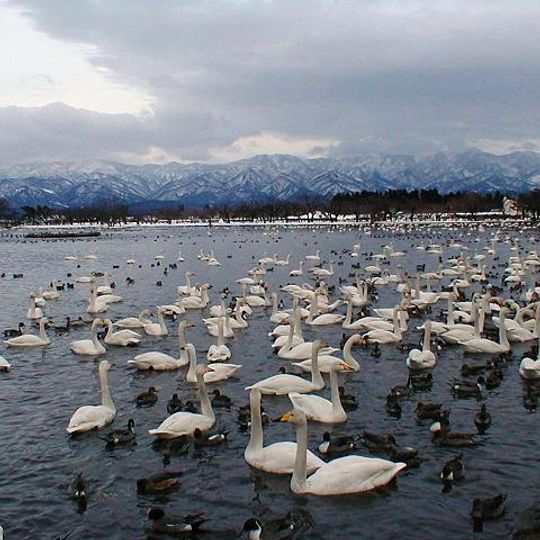
Lake Hyōko is a man-made pond completed in 1639 in the Suibara district of Agano, Niigata Prefecture; its outline was likened to a gourd, which gave it the name. The water holds floating-leaved plants such as water chestnut, lotus, reeds and wild rice, and in the photograph a dense flock of white swans rests on the rippled surface among scattered ducks, with a low treeline, snow-covered mountains and an overcast sky behind.
This reservoir was created in 1639 during the Edo period to serve agricultural irrigation needs in the region. Over time, its ecological value became recognized, leading to official protection status.
The lake's name comes from its 1639 shape, which resembled a gourd (hyōtan). In 1950 the first swans arrived, and in 1954 Yoshikawa Shigesaburō, known as the "Swan Uncle", became the first person in Japan to succeed in feeding wild swans here. The former Suibara town flower, the iris, and lotus are planted around the lake, which is laid out as Hyōko Mizukin Park.
The lake lies about 2 km east of JR Suibara Station on the Uetsu Line; the Hyōko-mae bus stop on the Niigata Kotsu S9 line and the Agano city bus stop are both right by the water. By car it is roughly 15 minutes from Niitsu IC and 16 minutes from Yasuda IC. Swans stay from around October to March and feed in nearby fields by day, returning to the lake at night.
From October through March, thousands of swans arrive here from Siberia, making this their first feeding ground when entering Japan. This annual arrival marks a crucial rest point on their long migration journey.
The community of curious travelers
AroundUs brings together thousands of curated places, local tips, and hidden gems, enriched daily by 93,202 contributors worldwide.