Mausoleum of Tangun, Ancient burial monument in Kangdong County, North Korea.
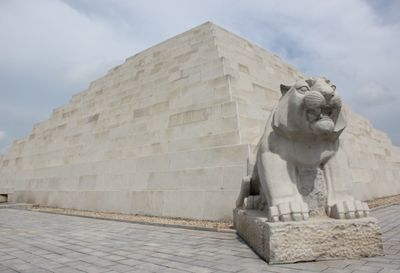
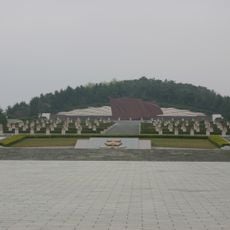
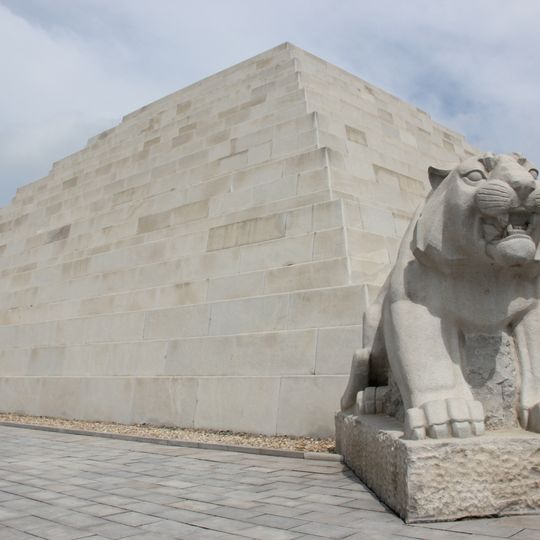
The Mausoleum of Tangun is a step pyramid 22 m high and 50 m on each side, built in 1994 from 1,994 stone blocks on the slope of Mount Taebak. The complex covers 1.8 km² and is divided into a restoration work area, a stone statue area and the burial site. The tomb chamber, 5.7 m square and 4.8 m high, is entered from the rear and holds two coffins. Stone tiger sculptures and sword towers stand at the corners of the platform.
Excavations by North Korean archaeologists in the 1990s uncovered human remains and artifacts suggesting an ancient burial site. The findings were dated to over 5,000 years ago, connecting the location to the earliest chapters of Korean history.
North Korea holds an annual Tangun rite and commemorative report at the mausoleum on 3 October, the National Foundation Day. State accounts tie the site to Kim Il Sung and Kim Jong Il and use it to argue that Tangun was a real person and that Pyongyang is the birthplace of the Korean nation. The tomb is listed as National Treasure No. 174.
The 1.8 km² complex on the slope of Mount Taebak is divided into a restoration work area, a stone statue area and the burial site. The pyramid's entrance lies at the rear, leading into a square chamber 5.7 m long and 4.8 m high. The ground is uneven and visits are made on foot.
The 1994 pyramid was assembled from exactly 1,994 stone blocks, one for each year of the reconstruction. Inside, a chamber 5.7 m square and 4.8 m high holds two coffins said to contain the bones of Tangun and his queen. At the corners of the platform stand stone tiger carvings and towers shaped like the lute-shaped daggers of the Gojoseon period.
The community of curious travelers
AroundUs brings together thousands of curated places, local tips, and hidden gems, enriched daily by 95,037 contributors worldwide.