Mount Kumgang, Mountain range in Kangwon-do, North Korea
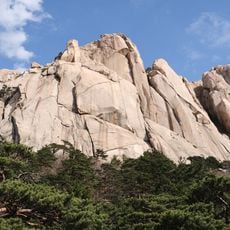
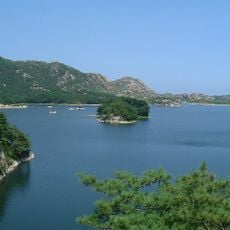
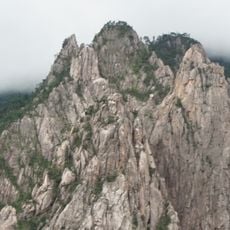
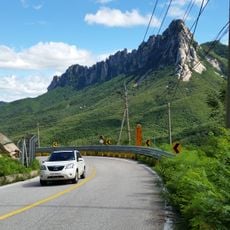
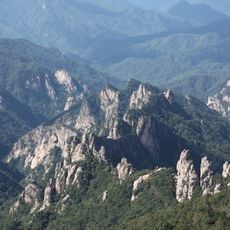
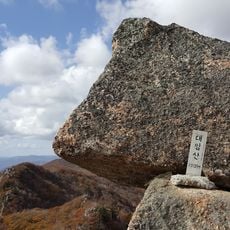
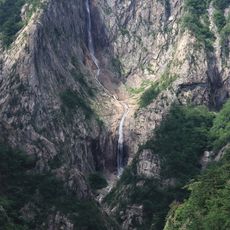
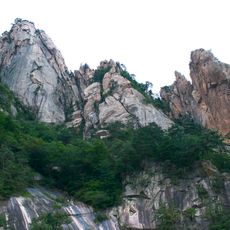
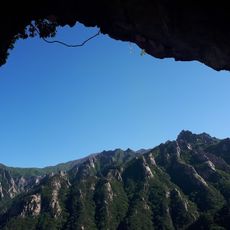
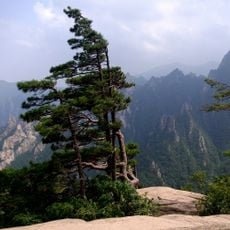
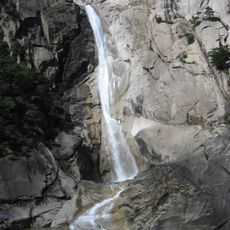
Mount Kumgang is a granite massif in the Taebaek range, rising to Pirobong at 1,638 metres. It is divided into Inner Kumgang in the west, Outer Kumgang in the east and Hae Kumgang along the coast. The massif measures about 40 km east–west and 60 km north–south, with more than 60 peaks above 1,000 metres. A thin waterfall drops down the left flank of the rock face above a pale streambed.
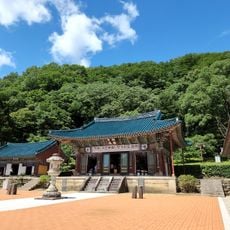
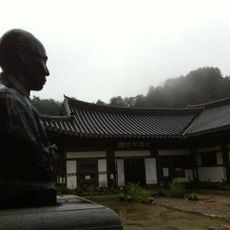
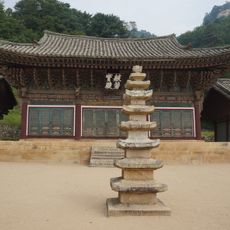
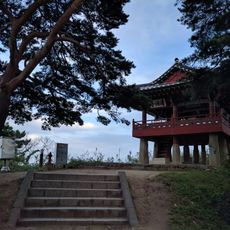
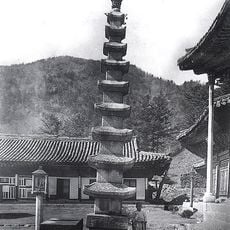
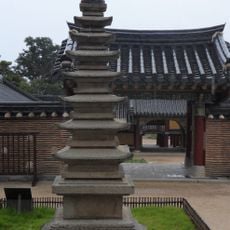
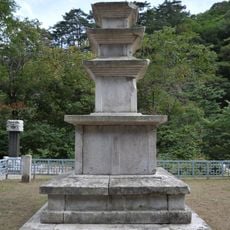
Buddhist temples such as Singyesa, Pyohunsa and Changansa stood here from the Silla period; most were destroyed during the Korean War, and Singyesa was rebuilt in 2004 with South Korean support. In 1998 South Korean tours began by cruise ship from Donghae, shifting to land routes in 2003; the 2008 shooting of a South Korean tourist halted the tours. The area was named a UNESCO World Heritage Site in 2025.
The name Kŭmgangsan comes from the Huayan Sutra, as does the figure of 12,000 peaks traditionally counted here. Koreans also call the mountain Pongraesan in summer, Pung'aksan ("great mountain of colored leaves") in autumn and Kaegolsan ("all bone mountain") in winter. Since the 2000s North and South Korean Buddhist communities have agreed to restore the four great temples; Singyesa was rebuilt in 2004 with South Korean support.
Access requires special permits and must be arranged through authorized tour operators with advance planning. Visits are currently limited to North Korean territory, making independent travel not an option.
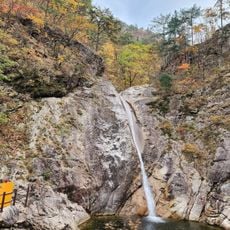
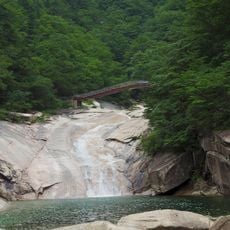
Kuryong Falls drops 74 metres over a single granite mass that forms both the cliff and the plunge pool below, making it one of Korea's three major waterfalls alongside Daeseung Falls in Seoraksan. The surrounding mixed forest is protected within a 60,000-hectare national park, and 25,000 hectares of it are recognised as an Important Bird Area for the endangered red-crowned crane.
The community of curious travelers
AroundUs brings together thousands of curated places, local tips, and hidden gems, enriched daily by 94,372 contributors worldwide.