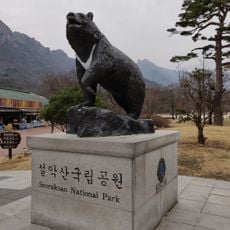
Seoraksan National Park, National park in Gangwon Province, South Korea
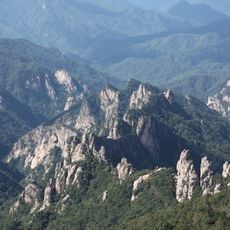
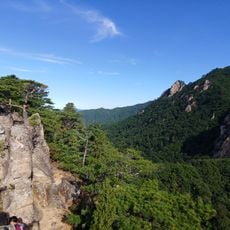
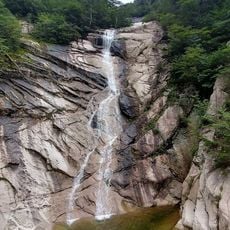
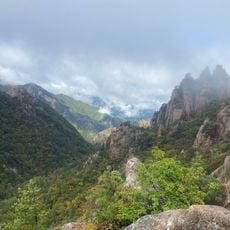
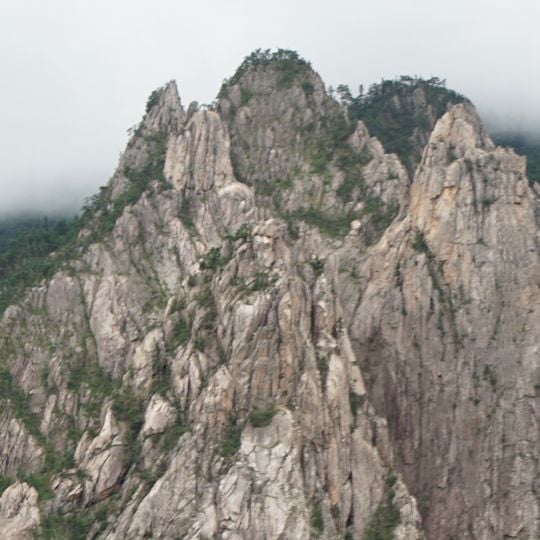
Seoraksan National Park covers 163.6 square kilometres of the Taebaek range in Gangwon, built largely of dissected granite and gneiss. Daecheongbong, its highest peak, reaches 1,708 metres, and more than a dozen summits rise above 1,200 metres. The light grey rock face is streaked with dark fissures, with pines, oaks and yews on the slopes and thuja in the deep valleys.
Seoraksan was designated Natural Monument No. 171 on 5 November 1965. On 24 March 1970 it became one of South Korea's first national parks under the National Park Law, together with Songnisan and Hallasan. UNESCO named it a biosphere reserve on 12 August 1982, and the park area was enlarged to 398.53 km² in 2003.
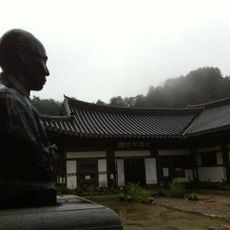
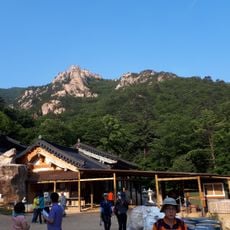
Two Buddhist temples stand inside the reserve: Sinheungsa and Baekdamsa. Sinheungsa is home to a large bronze Buddha statue that visitors can see. Both remain active places of worship where Buddhist ceremonies are held.
Multiple hiking trails of varying difficulty connect through the park, and cable cars help reach higher sections with less effort. Weather in the mountains can change quickly, so bringing layers and appropriate footwear is advisable.
Seoraksan's northern slopes carry oaks and other deciduous trees, while Siberian pine is abundant on the southern slope; Thuja grows in the deep valleys. The rare plant Hanabusaya asiatica is among 1,013 recorded plant species. The 17th World Scout Jamboree brought thousands of scouts to Mount Sorak from 9 to 16 August 1991.
The community of curious travelers
AroundUs brings together thousands of curated places, local tips, and hidden gems, enriched daily by 93,762 contributors worldwide.