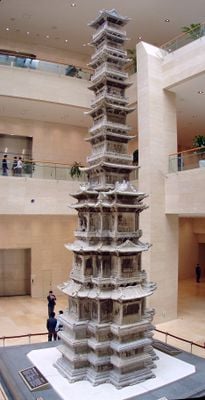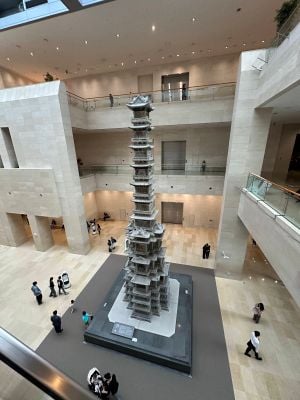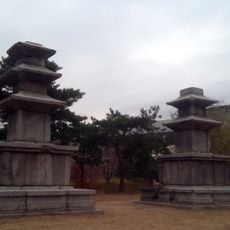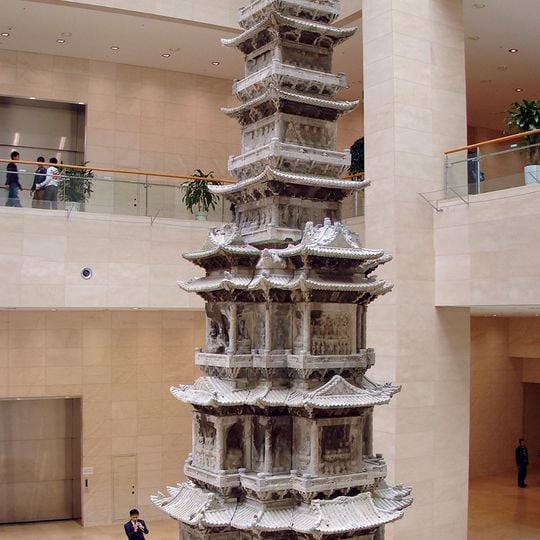
Gyeongcheonsa Pagoda, Stone pagoda at National Museum of Korea, Seoul, South Korea.
Gyeongcheonsa Pagoda is a ten-story marble pagoda housed inside the National Museum of Korea in Seoul, built on a cross-shaped foundation that extends in four directions. It stands around 13 meters tall and is covered in carved relief work from its base to its top.
The pagoda was built in 1348 during the Goryeo period, one of the last great examples of stone craftsmanship from that era. It was removed to Japan in 1907 and brought back to Korea in 1918 after pressure from those who argued it had been taken without permission.
The pagoda displays carvings of Buddhas, bodhisattvas, and floral patterns on each of its ten levels, all still clearly visible today. Walking around the base gives a close view of how Goryeo artists worked stone with the same care usually given to wooden temples.
The pagoda stands in the Path to History gallery inside the National Museum of Korea, where visitors can walk all the way around it to see every side. Since it is displayed indoors, there is no need to worry about weather or light conditions when planning your visit.
Most Korean pagodas from the same period were carved from granite, but this one is made of marble, which gives the surface a smoother look and a softer tone in indoor light. The carved details also copy forms normally seen in wooden buildings, so the stone structure has an unusual lightness to it.
The community of curious travelers
AroundUs brings together thousands of curated places, local tips, and hidden gems, enriched daily by 60,000 contributors worldwide.