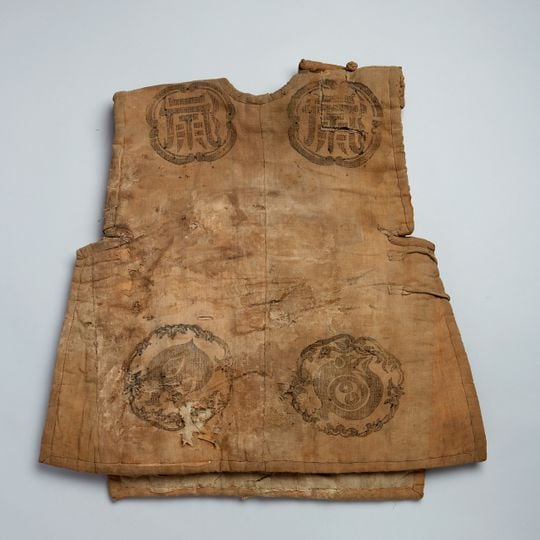
Myeonje baegab, Military armor in Seobinggo-dong, Seoul, South Korea
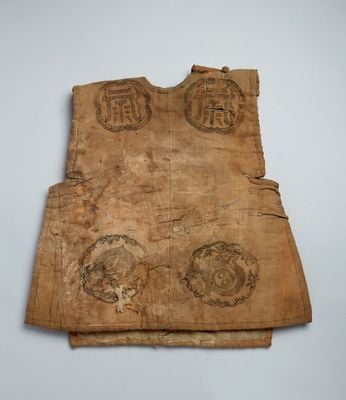
The Myeonje baegab is a protective vest made from multiple layers of cotton fabric designed to shield soldiers from rifle fire. The garment combined many cloth layers sewn together to create a thick, resistant protective barrier.
Regent Heungseon Daewongun ordered the development of bulletproof armor after Joseon matchlock troops met Western rifles during the 1866 French expedition to Korea. The vests were completed in 1867 and issued to soldiers. They were used on Ganghwa Island against United States Navy and Marine forces in 1871.
This armor represents how Korean craftspeople responded creatively to foreign military threats with available resources. It demonstrates the ingenuity of local armorers who found practical solutions despite technological disadvantages.
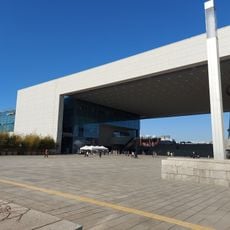
The vest is on public display at the National Palace Museum of Korea in Seoul, so check that museum's opening days before setting out. Look for the four dark circular emblems stamped on the cotton, two at the shoulders and two lower down, one torn open to show the wadding.
The vest was held at the Smithsonian Institution until 2007, when it was sent back to Korea. It is now shown at the National Palace Museum of Korea and featured in the special exhibition "Suajagi (帥字旗) — Return After 136 Years", marking its journey from the 1871 battlefield to its homecoming.
The community of curious travelers
AroundUs brings together thousands of curated places, local tips, and hidden gems, enriched daily by 94,316 contributors worldwide.