Seoul National Cemetery, National cemetery in Dongjak District, South Korea.
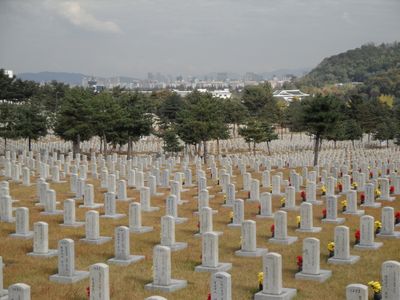
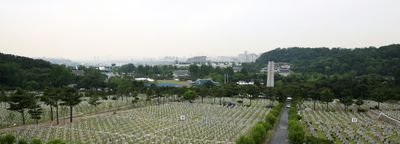
Seoul National Cemetery is a burial ground in Dongjak District that spans multiple sections along the Han River. The grounds feature stone walls, a memorial tower, and symmetrically arranged grave sites, including an enshrinement hall for those without remains.
The cemetery was established in 1956 under President Syngman Rhee to honor veterans, soldiers, and independence fighters from Korean conflicts. Its creation marked a pivotal moment in South Korea's effort to commemorate those who died serving the nation.
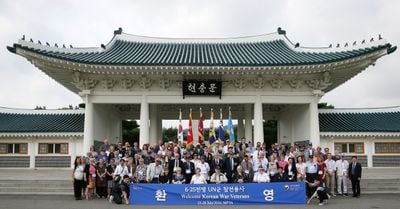
The Memorial Gate displays traditional architecture with tiger statues that symbolize protection for the souls of patriots, drawing from beliefs during the Goryeo and Joseon periods. These design elements connect ancient Korean spiritual concepts with remembrance of the fallen.
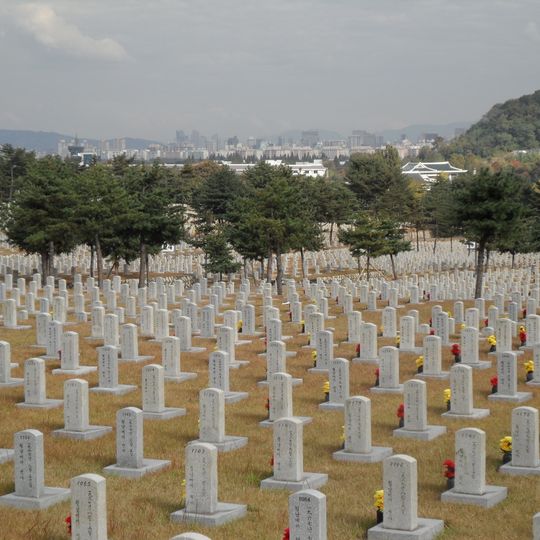
The cemetery is near Dongjak Station on subway lines 4 and 9. It is usually open to the public except on some special days. The grounds are laid out in long rows of identical upright headstones on a lawn, with narrow grass strips and low hedges between them; a small sign reading "15" marks one section.
The cemetery grounds include the tomb of Royal Consort Changbin of the Andong An clan, grandmother of King Seonjo. The site was chosen partly for its feng shui, described as a "bronze bird embracing eggs" formation, and the geomancer Nam Sa-go reportedly predicted royal energy there; both Seonjo and later King Gojong were born from this lineage.
The community of curious travelers
AroundUs brings together thousands of curated places, local tips, and hidden gems, enriched daily by 93,473 contributors worldwide.