Eunsusa, Buddhist temple in South Korea
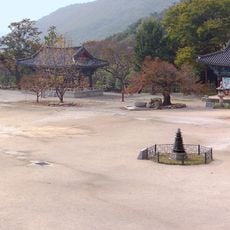
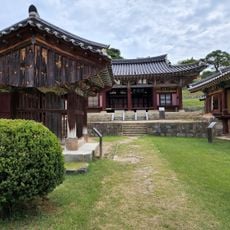
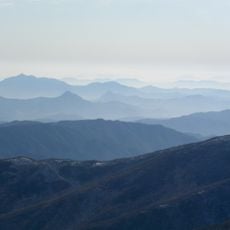
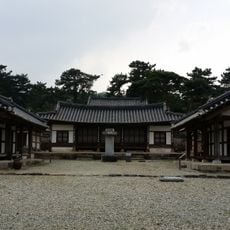
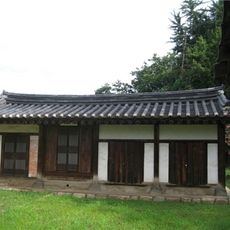
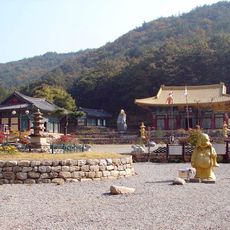
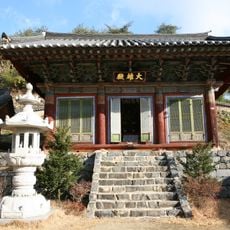
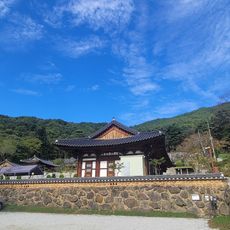
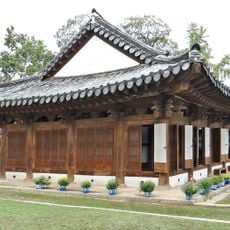
Eunsusa is a small Jogye Order temple at the foot of Sutmaibong, the Elephant Rock of Maisan in Jinan County. Its grounds hold a Buddha hall and a mountain-spirit shrine, later joined by Geungnakjeon, Taegeukjeon and Daeungjeon halls and monks' quarters. Two Natural Monuments grow on the site: a community of Maisan julsacheolnamu and the Cheongsilbae pear tree.
Eunsusa stands in Dongchon-ri, Maryeong-myeon, Jinan County, at the foot of Maisan. In the early Joseon period the site held a temple called Sangwonsa; by the reign of King Sukjong only its foundations remained, and a small hermitage named Jeongmyeongam was later built there. That too fell into ruin until 1920, when a man named Yi Jubu rebuilt it and renamed it Eunsusa.
The name Eunsusa means "Silver Water Temple"; the Hankul Society's Gazetteer of Place Names records that King Taejo of Joseon gave it after drinking the site's water and finding it clear as silver. The temple also keeps a shrine to Dangun Wanggeom, the legendary founder of Gojoseon, and a large drum that visitors may strike.
The temple is accessible by public transportation from nearby urban areas and welcomes visitors to explore the grounds independently. Comfortable walking shoes and modest clothing are recommended for a respectful temple visit.
The temple keeps a large drum made in 1982, once the largest in Korea, which visitors are allowed to strike. Stone statues thought to date from the early Joseon period, including a Samshin grandmother figure, were excavated at the old Sangwonsa site within the grounds.
The community of curious travelers
AroundUs brings together thousands of curated places, local tips, and hidden gems, enriched daily by 93,468 contributors worldwide.