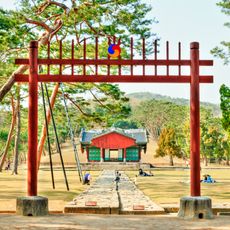
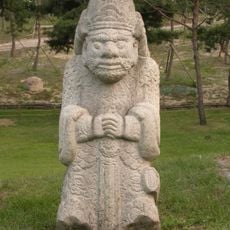
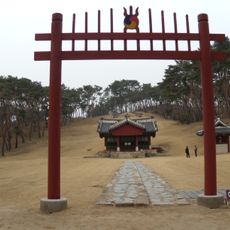
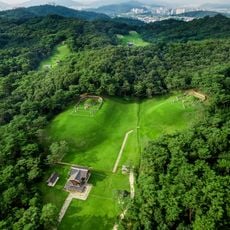
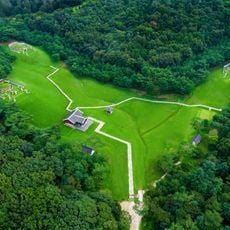
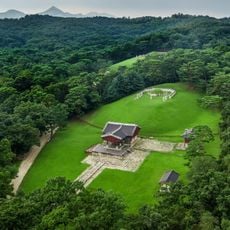
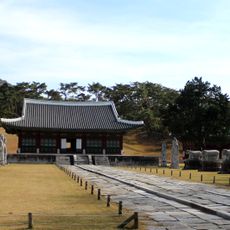
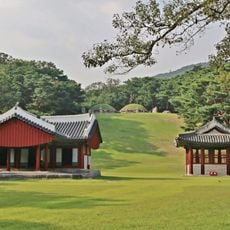
Geonwolleung, Royal cemetery in Guri, South Korea.
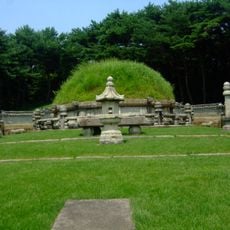
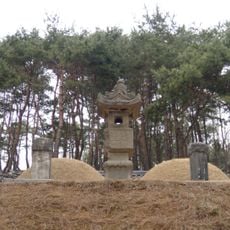
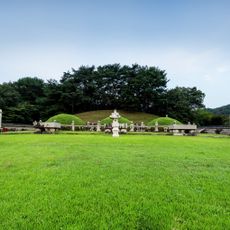
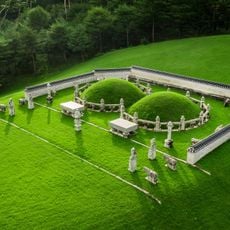
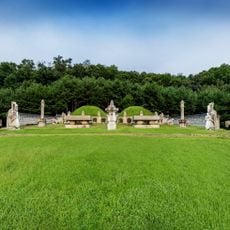
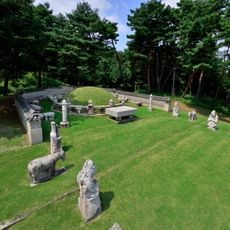
Geonwolleung is the tomb of King Taejo, founder of the Joseon Dynasty, in Guri, Gyeonggi Province. The burial mound is covered with silver grass, unlike the grass-covered mounds of other royal tombs. The stone screen around the mound bears carvings of the twelve zodiac deities and cloud patterns, and the side stones are engraved with Buddhist ritual objects.
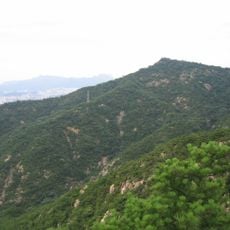
Taejo died on 24 May 1408 at age 74. His son Taejong had geomancers search within 100 li of Hanyang; on Haryun's recommendation, Pak Ja-cheong built the tomb on the slopes of Geomam Mountain with about 6,000 workers. The burial took place on 9 September 1408, and the stone burial chamber set a precedent for Joseon royal tombs.
The burial mound is covered in eulalia grass rather than the usual lawn, said to reflect Taejo's wish to be buried in Hamhung: earth and grass were brought from there as a compromise. The stone panels of the screen wall carry the twelve zodiac deities and cloud motifs, while the side stones bear the Buddhist symbols yeongjeo and yeongtak, later replaced by clouds after the compilation of the Gukjo Oryeui.
The grounds are open to visitors daily, allowing you to explore at your own pace or with informational guidance along the paths. Plan to spend enough time to see all the structures and understand how they are arranged across the site.
Taejo's burial mound is covered in eulalia grass rather than the usual lawn. According to unofficial accounts, he wished to be buried in Hamhung, his ancestral home; Taejong instead brought soil and eulalia from Hamhung to cover the mound as a compromise. The stone panels of the retaining wall carry the twelve zodiac deities and cloud motifs, while the side stones bear the Buddhist ritual objects yeongjeo and yeongtak.
The community of curious travelers
AroundUs brings together thousands of curated places, local tips, and hidden gems, enriched daily by 93,459 contributors worldwide.