Ile-Alatau National Park, National park in Almaty Region, Kazakhstan.
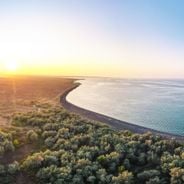
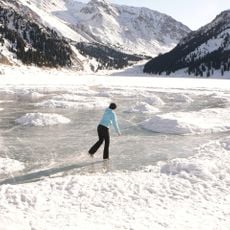
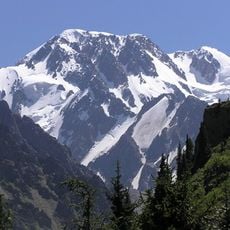
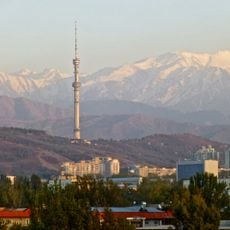
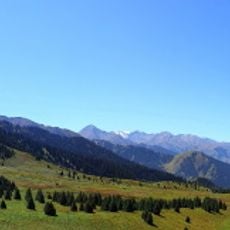
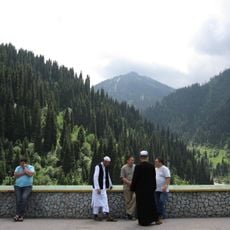
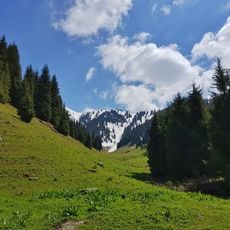
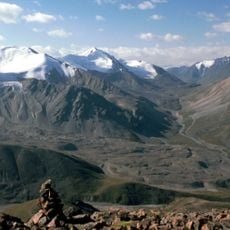
Ile-Alatau National Park covers 199,621 hectares on the northern slope of the Trans-Ili Alatau in the Tian Shan, stretching 120 km from the Chemolgan River in the west to the Turgen in the east and 30–35 km wide. Its elevations run from 600 to 4,540 m; the highest summit is Pik Konstitutsii at 4,540 m, followed by the 25 Years of Kazakhstan peak at 4,494 m. The park holds the Dmitriev Glacier (17 km²), moraine lakes such as Big Almaty Lake (1 km², 39.3 m deep) at 2,500 m, and the Turgen, Issyk, Talgar, Kargaly and Aksai rivers.
The park's history began in 1931 with the Almaty State Reserve in the Malaya Almatinka valley, initially 15,000 hectares; by 1935 it had grown to 40,000 and later to 856,700 hectares as the Alma-Ata Reserve covering the whole Zailiysky Alatau ridge. Kazakh academics Isa Baitulin, Boris Bykov and Yevgeny Gvozdev pushed for a national park, and a feasibility study was prepared in 1990. The Ile-Alatau park was created by government decree on 22 February 1996 on the lands of the Kaskelen, Prigorodny and Turgen forestry farms.
Within the park lie the remains of the ancient settlements Talkhiz and Turgen, and Saka burial mounds along the Esik River. In the Turgen gorge are early Iron Age cemeteries. The moss-covered Shynturgen spruces and Butakov Waterfall are protected natural monuments; beneath the moss of the spruces lies a 2–3 m thick layer of permafrost at 30–40 cm depth.
The park stretches 120 km from the Chemolgan River in the west to the Turgen River in the east, and is 30–35 km wide. Entry is from settlements such as Tau-Samaly, where the administration is based. The main rivers—Turgen, Issyk, Talgar, Bolshaya and Malaya Almatinka, Kargaly, Aksai and Kaskelen—carry meltwater from moraine lakes that fill in June and shrink by winter. Bolshaya Almatinka Lake lies at 2,500 m and covers 1 km² to a depth of 39.3 m.
The park holds the remains of the ancient settlements of Talkhiz and Turgen, and Saka burial mounds along the Esik River. In the Turgen gorge, the Shynturgen spruce, a relict tree covered in moss, hides a layer of permafrost 2–3 m thick beneath 30–40 cm of moss.
The community of curious travelers
AroundUs brings together thousands of curated places, local tips, and hidden gems, enriched daily by 93,476 contributors worldwide.