Lahore Museum, Archaeological museum in Lahore, Pakistan.
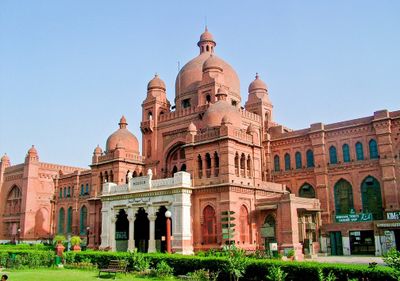
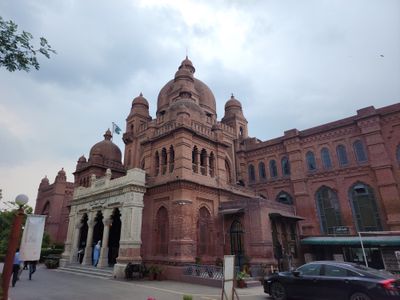
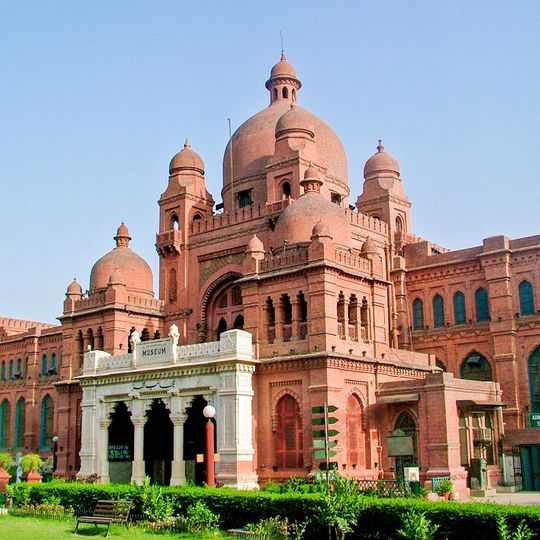
Lahore Museum is an archaeological museum in Lahore, Pakistan, whose red-brick building on Shahrahe-Quaid-e-Azam holds over 58,000 objects, with around 14,000 currently displayed across several halls. Collections range from ancient coins to contemporary paintings, miniatures, and finds from various periods of South Asian history.
The museum opened in 1865 and moved to its current building in 1894, designed by architect Ganga Ram in Indo-Saracenic style. Since then it has grown its collections and become a major center for studying South Asian history.
The Buddhist galleries hold sculptures and reliefs from regions now part of Pakistan, showing connections between Greek and Indian art traditions. Visitors also find manuscripts, Islamic calligraphy, and objects from Mughal rulers that reflect the religious and artistic heritage of the subcontinent.
Visitors should allow enough time to explore multiple galleries, as collections cover different periods and art forms. The rooms are arranged indoors, making orientation through signs and layout straightforward.
The entrance hall displays a large ceiling mural called The Evolution of Mankind, created by Pakistani artist Sadequain across 48 panels. The work catches the eye immediately and contrasts with exhibits from past centuries.
The community of curious travelers
AroundUs brings together thousands of curated places, local tips, and hidden gems, enriched daily by 92,074 contributors worldwide.