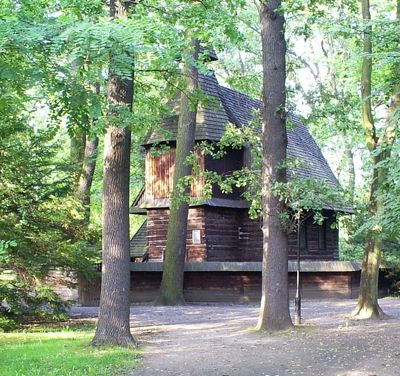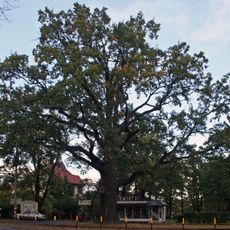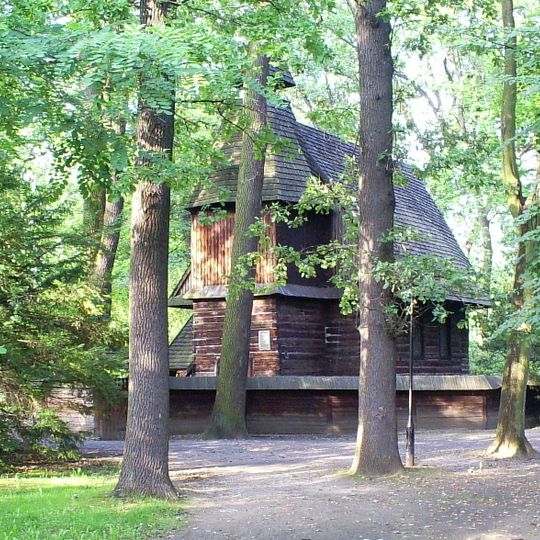
Saint John of Nepomuk church in Wrocław, Wooden church in Szczytnicki Park, Wrocław, Poland
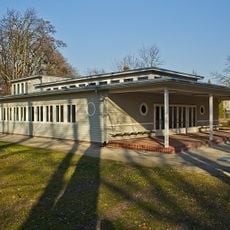
The church in Szczytnicki Park is a wooden church moved here from Stary Koźle in Upper Silesia and reassembled for the 1913 Centenary Exhibition as a model rural cemetery church. The architect Theodor Effenberger directed the dismantling and reassembly, which included conservation of elements and changes such as the shape of the windows.
The church was built in Stary Koźle in Upper Silesia at the end of the 15th or start of the 16th century; its consecration is recorded on 9 May 1499. After its tower collapsed on 26 December 1806 it was dismantled and moved to Kędzierzyn. In 1913 it was reassembled in Szczytnicki Park for the Centenary Exhibition under architect Theodor Effenberger, who also altered the window shapes.
The church was consecrated on 9 May 1499 as the Nativity of the Blessed Virgin Mary and later belonged to the parish of St John of Nepomuk, from whom its current name comes. Since 1966 it has been in the care of the Silesian Museum, and it now stands as a museum exhibit within Szczytnicki Park.
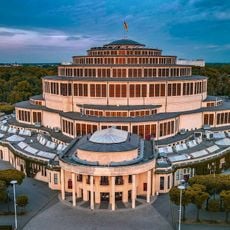
The church stands in Szczytnicki Park near the Centennial Exhibition grounds, where it was reassembled in 1913 as the centrepiece of a model rural cemetery. It is a historic monument (register no. A/5345/134) and has passed through several renovations, most recently in 1979–1980.
During the two years after 1957, paintings stolen from the National Museum in Wrocław were hidden inside this wooden church. The building had been entered in the city's monument register on 15 February 1962 under number A/5345/134.
The community of curious travelers
AroundUs brings together thousands of curated places, local tips, and hidden gems, enriched daily by 93,461 contributors worldwide.