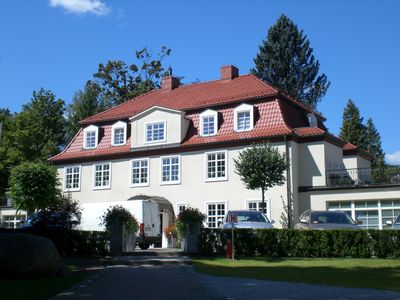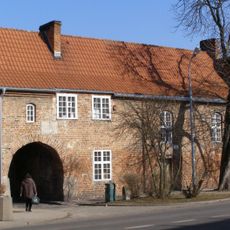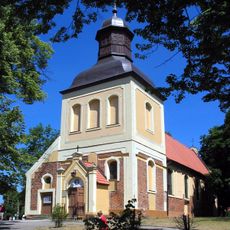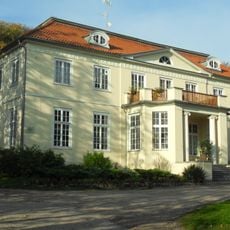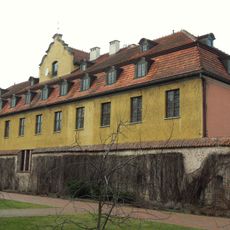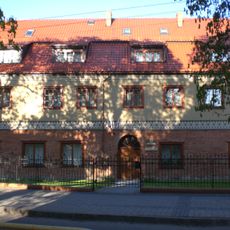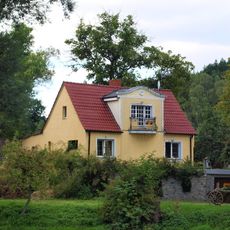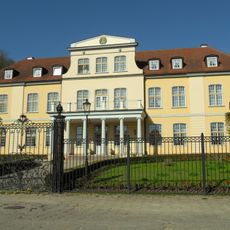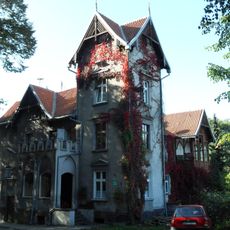
Dwór Oliwski, Manor house in Oliwa district, Gdańsk, Poland.
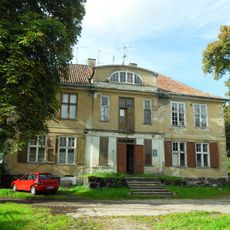
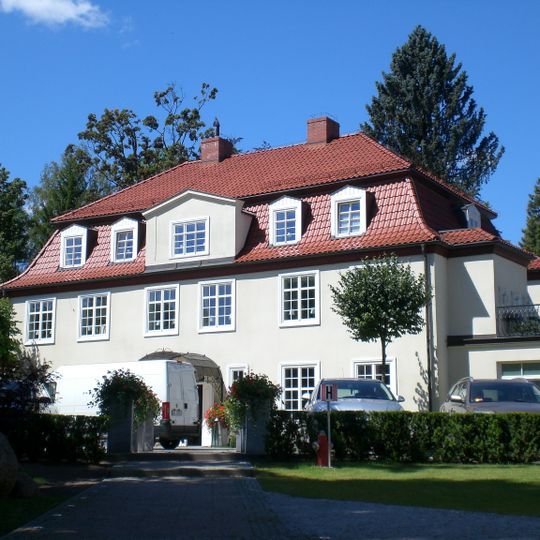
Dwór Oliwski is a manor house near Gdańsk now operating as a hotel with guest rooms situated within wooded park grounds. The building features a main residential wing with classical facades and separate areas dedicated to dining, accommodations, and recreational facilities.
The manor, with its orchard, garden and mill, is first documented in 1597 on land owned by the Oliwa Cistercian monastery. In 1601 the Gdańsk official Jakub Schwabe bought the pond and mill, and in 1611 the manor itself, where he lived with his wife. Accused of embezzling city funds in 1615, he hanged himself at the main entrance; the site was called Schwabenthal for three centuries. About 20 owners held it until 1945, and after the war it fell into ruin.
The name Dwór Schwabego (Schwabenthal) comes from Jakub Schwabe, who bought the manor in 1611 and hanged himself at its entrance in 1615 after being accused of embezzling Gdańsk's funds. The wine cellar he installed in the 16th-century vaulted basement still operates as a winery. The present interiors are furnished in Provençal style with Tuscan furniture.
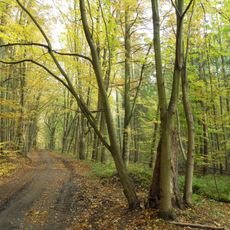
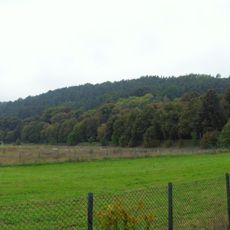
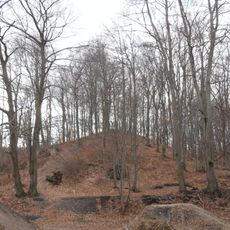
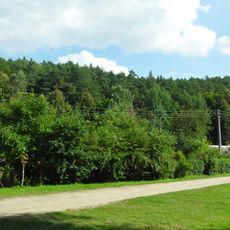
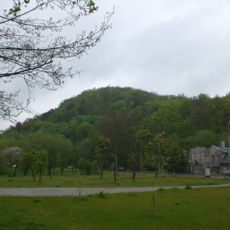
The manor stands at Bytowska 4 in Oliwa, on the Oliwski Stream where the Radość and Zgniłe Mosty valleys meet, with Oliwskie Forests on three sides. The wooded grounds and the 19th-century English-style park are best explored on foot, so allow time for walking between the buildings and the stream.
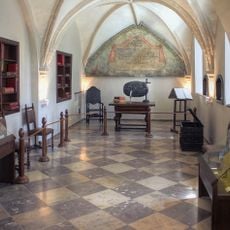
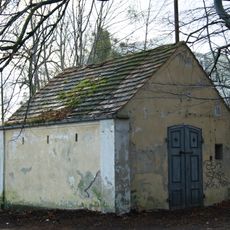
The cellar of the surviving 17th-century house has a cross-vaulted ceiling and holds a wine bar, a use first introduced there by Jakub Schwabe. The building is the only one of the complex preserved intact; the historic barn and granary collapsed completely in the mid-1980s.
The community of curious travelers
AroundUs brings together thousands of curated places, local tips, and hidden gems, enriched daily by 93,148 contributors worldwide.