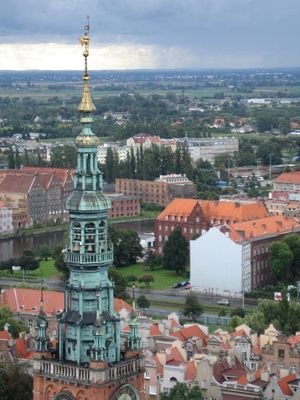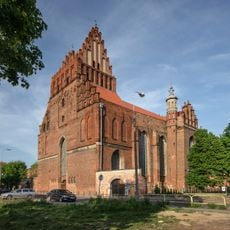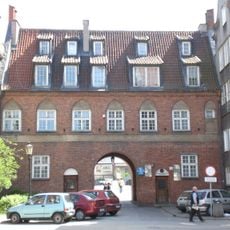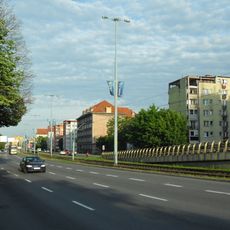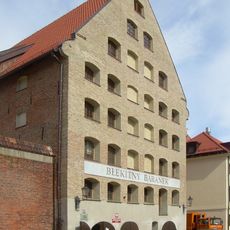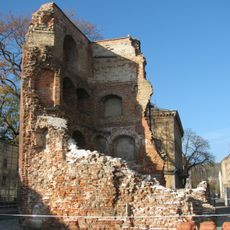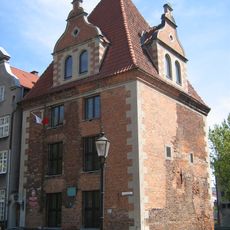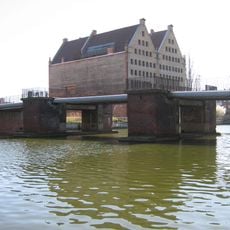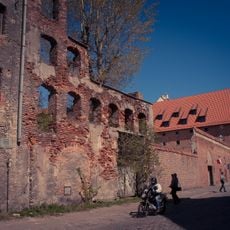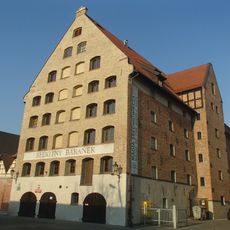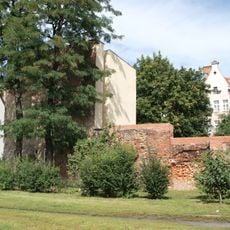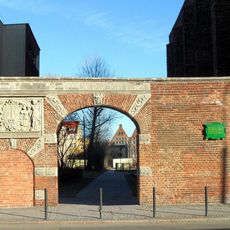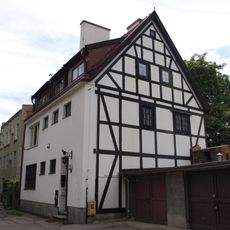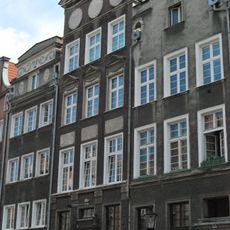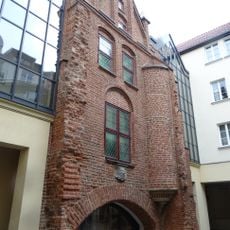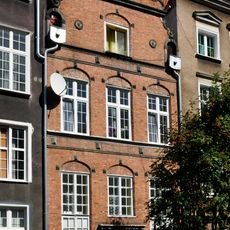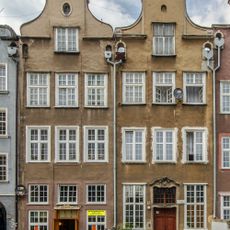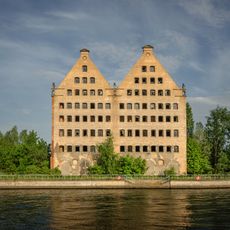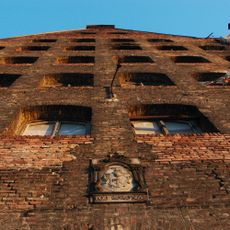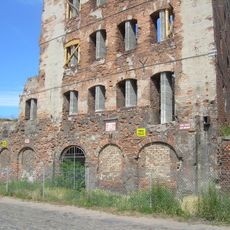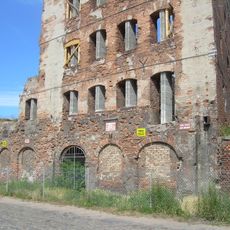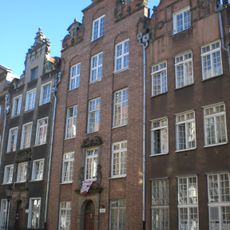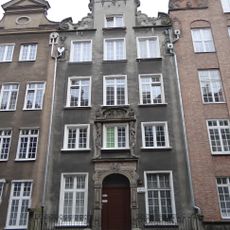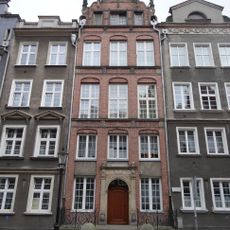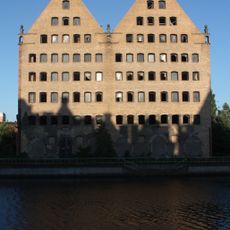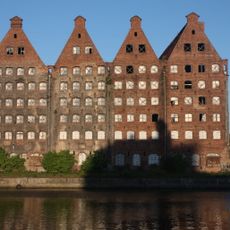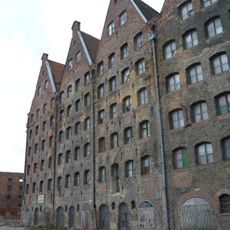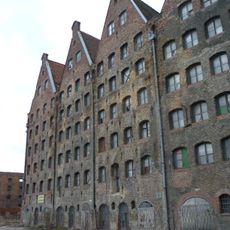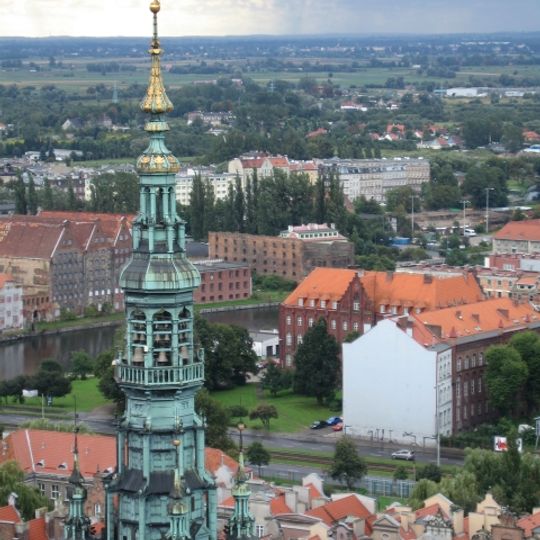
Targ Maślany Street in Gdańsk, Historical street in Śródmieście, Gdańsk, Poland.
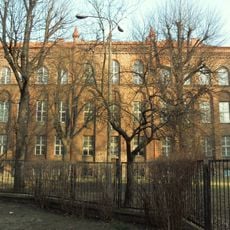
Targ Maślany is a historic square in Gdańsk's Stare Przedmieście, on the bank of the Motława, bounded by Lastadia, Targ Maślany and Podwale Przedmiejskie streets. Its paved open space is framed by the surviving former Municipal Gymnasium (Lastadia 2) and the former Royal Post Directorate (Lastadia 41), built 1875–1878 to Carl Schwatlo's design. The Winter fountain that once stood here was removed after 1945.
Targ Maślany was established in 1650 as a wholesale butter market on the Motława, where butter also arrived by boat. It was run by butter captains appointed by the city council and held covered stalls and a weighing house. Trade ceased in 1829, and the city bought the land; the Municipal Gymnasium was built there in 1834–37. In 1875 a green with the Winter Fountain was laid out, and from 1897 the square was named Winterplatz after a Gdańsk mayor.
The name comes from the butter trade: the Polish Targ Maślany and German Buttermarkt both mean butter market, and it was also called Targ Garnkowy (Topfmarkt) after the stone pots in which butter was sold. From 1897 to 1945 it was Winterplatz, after a Gdańsk mayor; after the war it was briefly plac Zimowy, then plac Zielony, before the traditional name returned in 1990.
The street is easy to reach on foot and sits in a central location next to other old town attractions. When visiting be aware that some buildings are currently undergoing renovation and access may be restricted at times.
The market was run by butter captains appointed by the city council, and its name also referred to the stone butter pots, giving the alternative name Targ Garnkowy (Pot Market). A covered stall building with a weighing house stood at the centre.
The community of curious travelers
AroundUs brings together thousands of curated places, local tips, and hidden gems, enriched daily by 94,458 contributors worldwide.