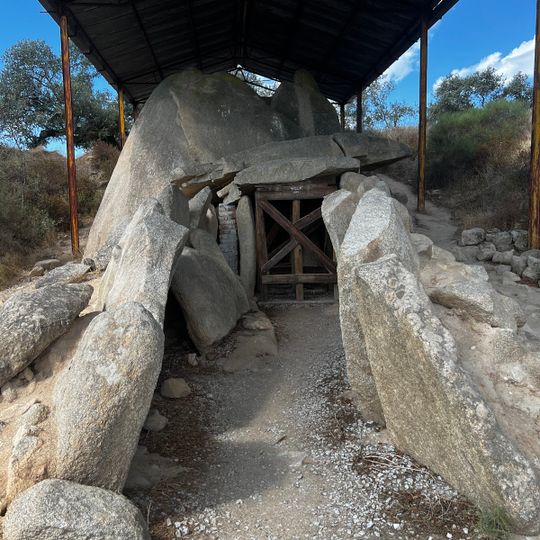
Great Dolmen of Zambujeiro, Neolithic burial monument in Nossa Senhora da Tourega, Portugal.
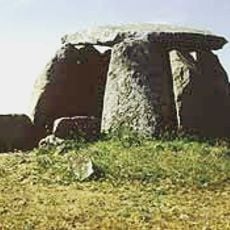
The Great Dolmen of Zambujeiro is a Neolithic dolmen with a polygonal chamber of seven granite slabs about 8 metres tall, reached by a 12-metre corridor 1.5 metres wide and 2 metres high. A 7-metre capstone lies broken on the mound, and the decorated menhir that marked the entrance is fallen.
Built between 4000 and 3000 BC, the dolmen was excavated in 1965 by Henrique Leonor Pina, whose methods stirred controversy; finds included slate tablets, necklaces, crosiers, copper objects, ceramics and carinated bowls, now in the Museum of Évora. It was declared a National Monument in 1971 (Decree-Law 516/71, 22 November). Further excavations in 1989–1990 under Carlos Tavares da Silva and Joaquina Soares remain unpublished.
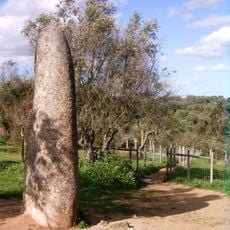
The chamber served for burials and possible religious cults during the Neolithic. The name Zambujeiro refers to a place of elderberry trees, and the monument is also called Anta Grande do Zambujeiro de Valverde. The decorated menhir that marked the entrance now lies fallen on the ground.
A metal fence surrounds the site to protect the ancient stones from damage and preserve its structure. The location sits about one kilometer north of the Convent of Bom Jesus of Valverde, making it relatively easy to find if you know where to look.
At the entrance sits a decorated stone slab that once stood upright but now lies flat, having marked the passage into the burial chamber. Above the chamber rests a large granite capstone, partially fractured over time, which has sheltered the interior space for thousands of years.
The community of curious travelers
AroundUs brings together thousands of curated places, local tips, and hidden gems, enriched daily by 93,188 contributors worldwide.