Luiz I Bridge, Multi-level iron arch bridge in Porto's historic center, Portugal.
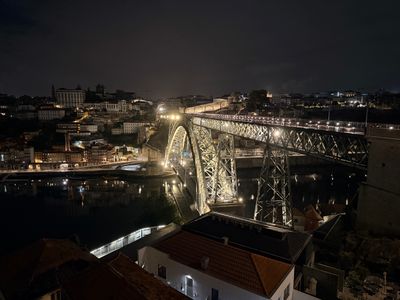
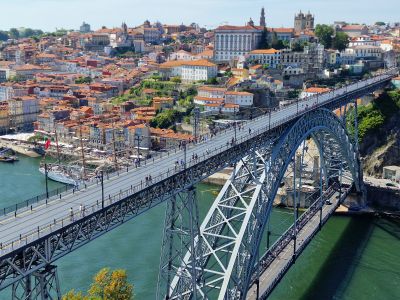
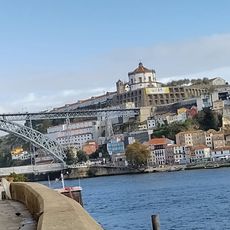
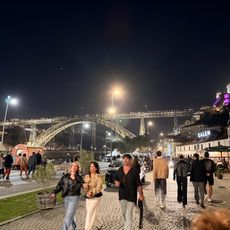
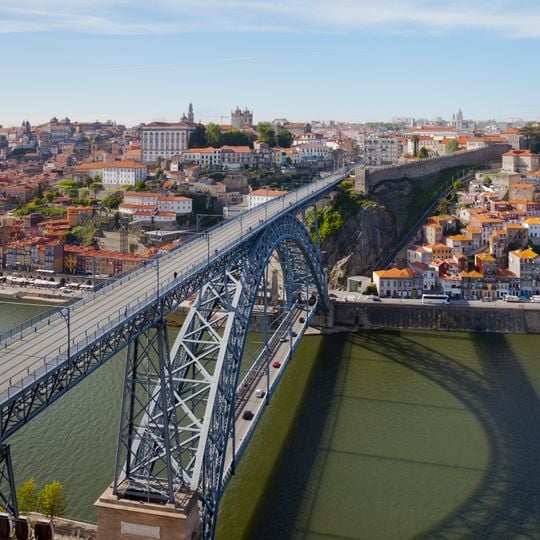
The Luiz I Bridge is a double-deck iron arch bridge over the Douro between Porto and Vila Nova de Gaia. Its central parabolic arch, 172.5 metres across, carries the upper deck, while a lower straight deck runs beneath it. Two vertical lattice towers flank the arch, and rows of lights outline both decks and the arch at night.
The bridge was built between 1881 and 1886 and replaced an earlier suspension bridge at the same location. Belgian engineer Théophile Seyrig, who worked with Gustave Eiffel, designed this revolutionary structure.
The bridge links two districts and forms part of Porto's UNESCO World Heritage site recognized since 1996. It shapes the city's visual identity and demonstrates Portugal's industrial strength during the 19th century.
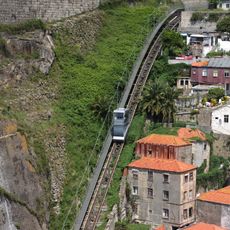
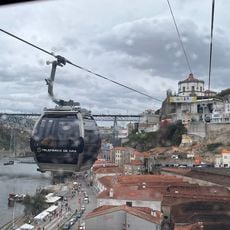
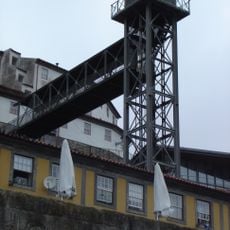
The upper deck carries Line D of the Porto Metro and pedestrians, linking São Bento station to the Serra do Pilar Monastery. The lower deck connects the Ribeira waterfront with the Gaia quays and since April 2023 is limited to public transport, taxis, cyclists and pedestrians. The Guindais Funicular and the Gaia Cable Car provide vertical connections at either end.
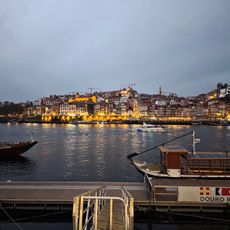
The structure was named after King Dom Luís I and received Cultural Heritage status in 1982. The nighttime lighting casts reflections on the water and makes the structure particularly visible after dark.
The community of curious travelers
AroundUs brings together thousands of curated places, local tips, and hidden gems, enriched daily by 93,109 contributors worldwide.