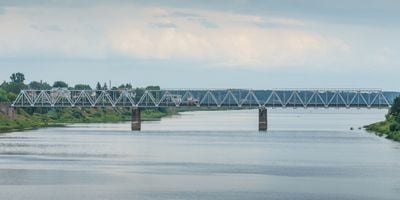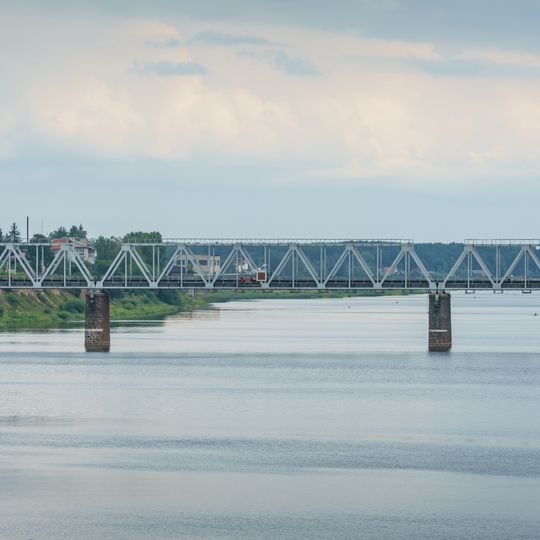
Riga Bridge, railway bridge in Pskov, Russia
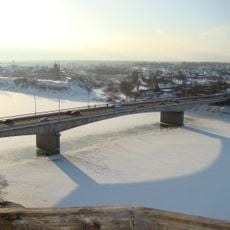
The Riga Bridge is a railway bridge crossing the Velikaya River in Pskov and forms part of the historical line from Valga to Tartu. Its structure rests on stone pillars rising from the water that support the tracks above, with a functional design that remains visible across many years.
The first bridge at this location began construction in the late 1880s as part of the railway connection between Saint Petersburg and Warsaw. The original structure suffered multiple destructions during 20th century conflicts, but was rebuilt each time to maintain regional connectivity.
The bridge carries a name reflecting its role in historical railway connections to the Baltic region. Local residents use it as an everyday link between different parts of the city and view it as a symbol of continuity through generations.
The bridge is easily visible from various points in the city and serves as a helpful landmark when exploring Pskov. As it is an active railway line, visitors should be aware of train traffic and ensure they maintain safe distance from the tracks.
A Soviet soldier named Semyon Baykov sacrificed his life in 1941 to ensure the detonation succeeded when Germans tried to prevent it. This act reflects the bridge's strategic importance during the war and the cost required to control it.
The community of curious travelers
AroundUs brings together thousands of curated places, local tips, and hidden gems, enriched daily by 91,942 contributors worldwide.