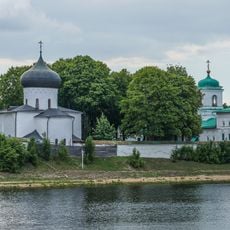
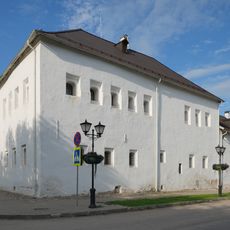
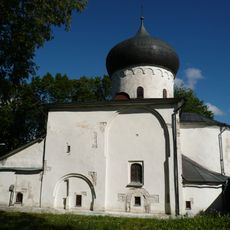
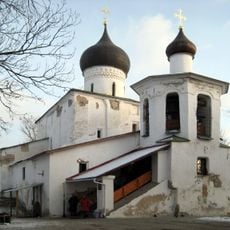
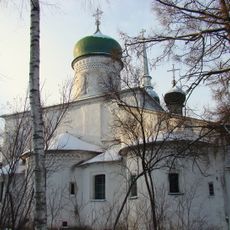
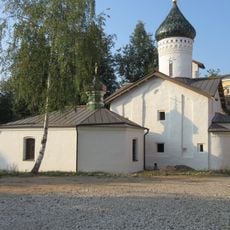
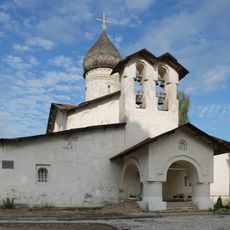
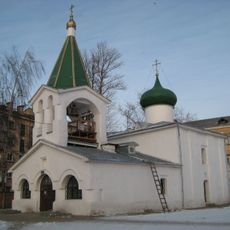
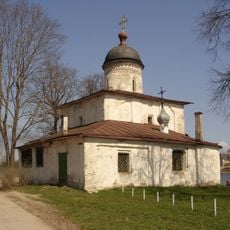
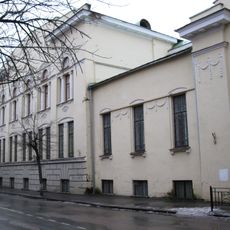
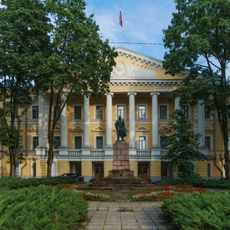
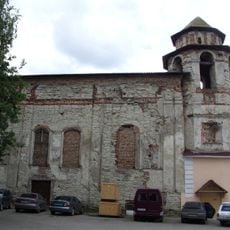
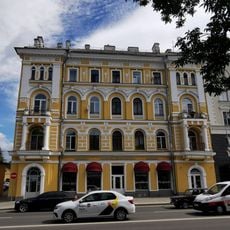
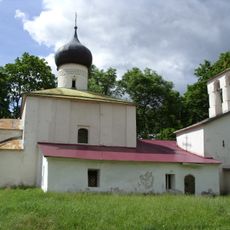
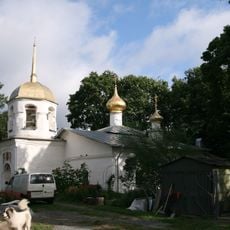
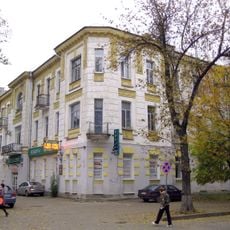
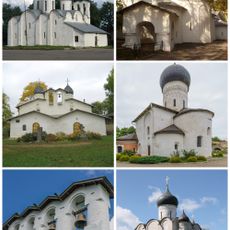
Fortifications in Pskov, Medieval fortress in Pskov, Russia.
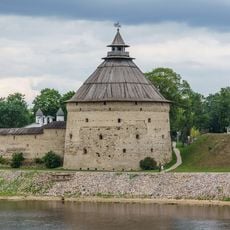
The Fortifications in Pskov comprise stone walls that encircle the city's historic core and include multiple towers and gateways at strategic points. These walls rise from a rocky plateau and form a layered defensive system designed to protect the settlement from attack.
Construction of the fifth ring of Pskov's fortifications began in 1465, first in wood and then in stone, with towers added up to the mid-16th century. The walls averaged 4–5 m thick and, with the Zapskovye extension and the Krom, ran over 9 km, reinforced by 39 battle towers and 48 gates. The walls withstood the Polish siege of 1581–1582, the Swedish assault of 1615 and a blockade by tsarist troops in 1650. On 30 August 1960 the structures were designated a republican-level architectural monument.
The name Okolny Gorod, meaning "outer town", replaced the earlier name Polonishche once the walls were finished in the early 16th century. The line of the fortifications survives in today's street names: along the former Sadovaya, now Pushkinskaya, and along Stennaya, now Sverdlova. The Pskova was crossed at the Upper Grilles, water gates that worked like the Lower Grilles at the mouth near the Krom.
Walking around the city center gives you the best view of the walls, towers, and gates from various angles. Wear sturdy shoes and allow time for a complete circuit, as parts of the routes are uneven and require steady footing.
The walls' average thickness was 4–5 m, and the full defensive line, including the Zapskovye extension and the Krom, ran over 9 km, with 39 fighting towers and 48 entry gates. The most serious test came in 1581–1582, when Polish forces concentrated their assault on the Pokrovskaya Tower complex.
The community of curious travelers
AroundUs brings together thousands of curated places, local tips, and hidden gems, enriched daily by 94,561 contributors worldwide.